

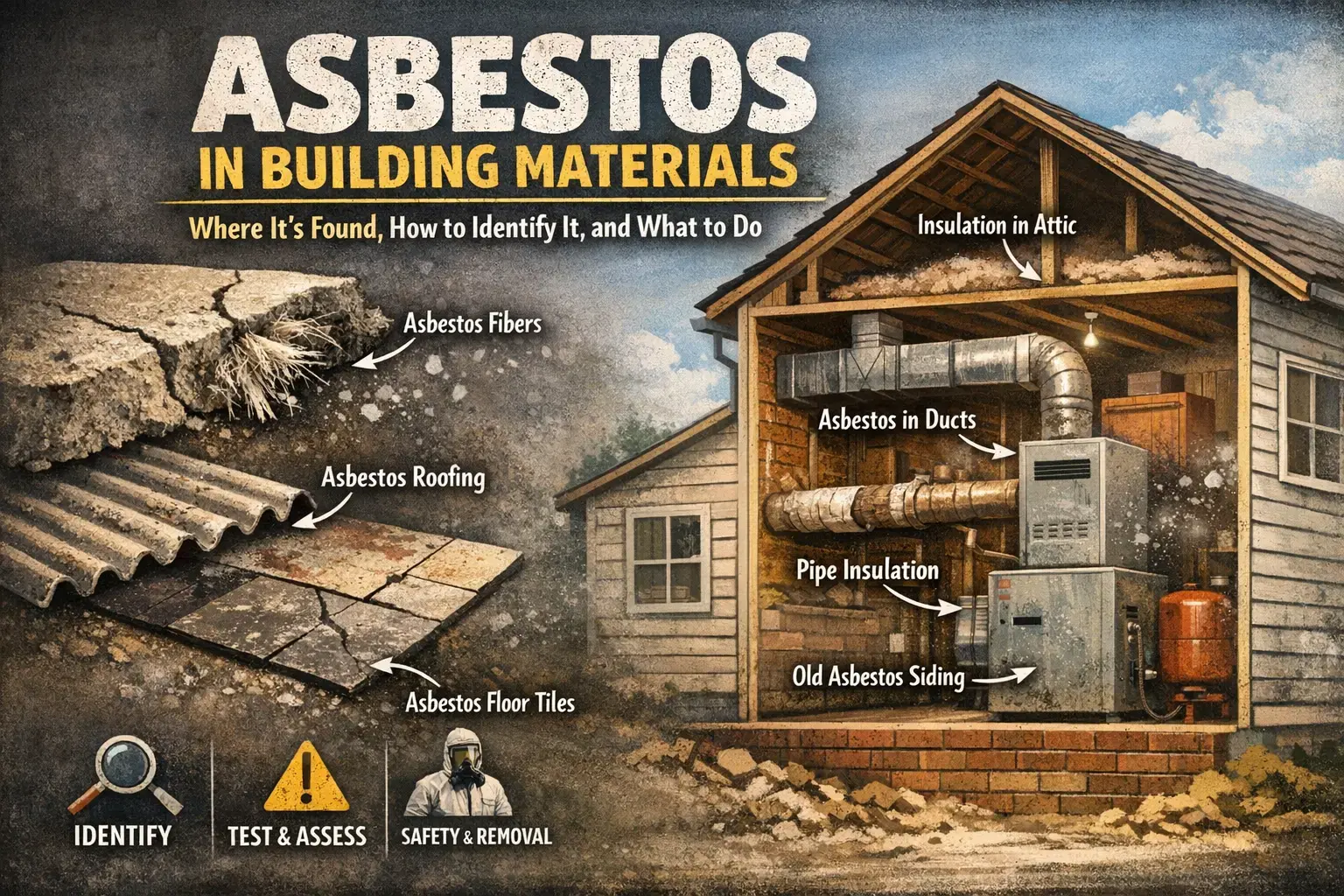
Asbestos was once a standard ingredient in building materials across homes, offices, and industrial structures. Today, it remains one of the most serious hidden hazards in older buildings. Many homeowners and renovators unknowingly come into contact with asbestos simply because they do not realize which materials contain it.
This pillar page focuses on one critical question:
Where exactly is asbestos found in buildings, and how can you deal with it safely?
If your property was built or renovated before the 1990s, this guide is essential.
Why Asbestos Was Added to Building Materials
Asbestos was mixed into building products because it solved multiple construction problems at once. It provided:
- Fire resistance
- Heat and sound insulation
- Strength and durability
- Resistance to moisture and chemicals
Because asbestos fibers bind well with cement, plaster, and adhesives, manufacturers used them in dozens of common materials, many of which still exist today.
To understand the basics behind this material, review what asbestos is and how it was used historically.
Why Building Materials Are the Biggest Asbestos Risk
Asbestos becomes dangerous when materials are:
- Cut, drilled, sanded, or broken
- Damaged by water or age
- Disturbed during renovations or demolition
Unlike loose insulation, asbestos in building materials often looks solid and harmless, which leads people to underestimate the risk.
This is why asbestos exposure commonly occurs during DIY projects and home renovations.
Asbestos in Floor Tiles
One of the most common locations for asbestos is flooring, especially in homes built between the 1940s and 1980s.
Asbestos Floor Tiles
Asbestos was commonly added to:
- Vinyl floor tiles
- Asphalt tiles
- Backing materials
These tiles are usually:
- 9×9 inches (a common red flag)
- Hard and brittle
- Dark-colored
Learn how to recognize them in asbestos floor tiles and how to tell if a floor tile has asbestos.
Asbestos in Vinyl Flooring
Sheet vinyl flooring and its backing often contain asbestos fibers.
See details on asbestos in vinyl flooring.
Asbestos in Linoleum
Some linoleum backing and adhesives also contain asbestos.
Learn more about asbestos in linoleum backing.
Asbestos in Ceiling Materials
Ceilings are another major asbestos hotspot.
Asbestos Ceiling Tiles
Common in basements, offices, and schools, these tiles often contain asbestos for fire resistance.
See asbestos ceiling tiles for identification tips.
Asbestos Popcorn Ceilings
Textured or “popcorn” ceilings frequently contained asbestos, especially before bans took effect.
Read asbestos popcorn ceiling and when they stopped using asbestos in popcorn ceilings for timelines and risks.
Ceiling materials are especially dangerous when scraped or drilled.
Asbestos in Walls and Drywall
Asbestos is not usually in drywall sheets themselves, but it is often present in:
- Joint compound
- Texture coatings
- Plaster materials
This becomes a major issue during wall repairs or remodeling.
Learn more about asbestos drywall joint compound.
Asbestos in Insulation Materials
Insulation was one of asbestos’s most common uses.
Pipe and Boiler Insulation
Often found in:
- Basements
- Boiler rooms
- Mechanical spaces
This insulation may look like:
- White or gray wrapping
- Chalky or fibrous material
Explore risks in asbestos insulation.
Insulation materials are particularly dangerous because they can easily release fibers when disturbed.
Asbestos in Roofing and Exterior Materials
Asbestos Shingles
Roof shingles and siding shingles were often reinforced with asbestos cement.
Learn identification tips in asbestos shingles.
Asbestos Siding
Exterior siding made with asbestos cement is still present on many homes today.
See asbestos siding and asbestos shingles vs fiber cement to understand the differences.
These materials are usually stable when intact but dangerous when cut or broken.
Asbestos in Adhesives, Sealants, and Mastics
Many people overlook adhesives, but asbestos was widely used in:
- Floor tile glue (black mastic)
- Window sealants
- Roofing adhesives
These materials are difficult to identify without testing and are often disturbed during renovations.
Asbestos in Old and Commercial Buildings
Older buildings often contain asbestos in multiple materials across different areas.
See asbestos in old buildings to understand why age matters.
Commercial buildings, schools, and factories are especially likely to contain asbestos due to fire safety requirements at the time of construction.
How to Identify Asbestos in Building Materials (Safely)
One of the most dangerous mistakes is trying to identify asbestos by appearance alone.
Key rule:
You cannot confirm asbestos without testing.
Materials may look normal, painted, or sealed while still containing asbestos fibers.
Learn visual limitations in what asbestos looks like.
Testing Building Materials for Asbestos
If you suspect a material contains asbestos, the correct approach is:
- Do not disturb the material
- Arrange professional sampling
- Use certified laboratories
Start with asbestos testing and asbestos analysis laboratories to understand the process.
Never break or scrape materials to “check.”
Inspection and Surveys for Building Materials
For buildings with multiple suspected materials, inspections and surveys are essential.
- Asbestos inspection helps identify likely materials
- Asbestos surveys map all asbestos-containing materials
Learn more in:
- how asbestos surveys are done
- when to get an asbestos survey
Surveys are often legally required before renovation or demolition.
Renovation Risks: Why Materials Matter
Most asbestos exposure happens during renovations, not daily living.
High-risk activities include:
- Removing floor tiles
- Scraping ceilings
- Drilling into walls
- Cutting siding or roofing
Before any renovation, review asbestos dangers in renovation.
What to Do If Building Materials Contain Asbestos
You generally have three safe options:
1. Leave It in Place
If the material is stable and undisturbed, management may be sufficient.
2. Encapsulation
Sealing asbestos to prevent fiber release.
3. Professional Removal
Required when materials are damaged or will be disturbed.
Learn more about asbestos abatement and asbestos abatement certification in the UK.
Disposal of Asbestos-Containing Materials
Asbestos waste must never be disposed of with household trash.
Learn safe handling from:
- how to bag asbestos safely
- local asbestos disposal centres
Improper disposal can result in fines and environmental hazards.
Legal Responsibilities Related to Building Materials
Property owners and landlords may be legally required to:
- Identify asbestos materials
- Maintain records
- Inform contractors
- Prevent exposure
Review asbestos safety regulations in the UK for compliance guidance.
Common Mistakes with Asbestos Building Materials
Avoid these costly errors:
- Assuming new-looking materials are asbestos-free
- Skipping testing before renovation
- Using unlicensed contractors
- Ignoring survey recommendations
Each mistake increases health and legal risk.
Frequently Asked Questions
Are all old building materials asbestos-containing?
No, but many are. Testing is the only way to know.
Is asbestos dangerous if painted over?
It may be safer, but still requires professional assessment.
Should I remove asbestos before selling a home?
Not always required, but disclosure and management are critical.
Final Thoughts
Understanding asbestos in building materials is where most real-world risk exists. Floors, ceilings, walls, insulation, and roofing are disturbed every day during repairs and renovations.This pillar connects knowledge (Pillar 1) and testing (Pillar 2) with practical, material-specific risk awareness.