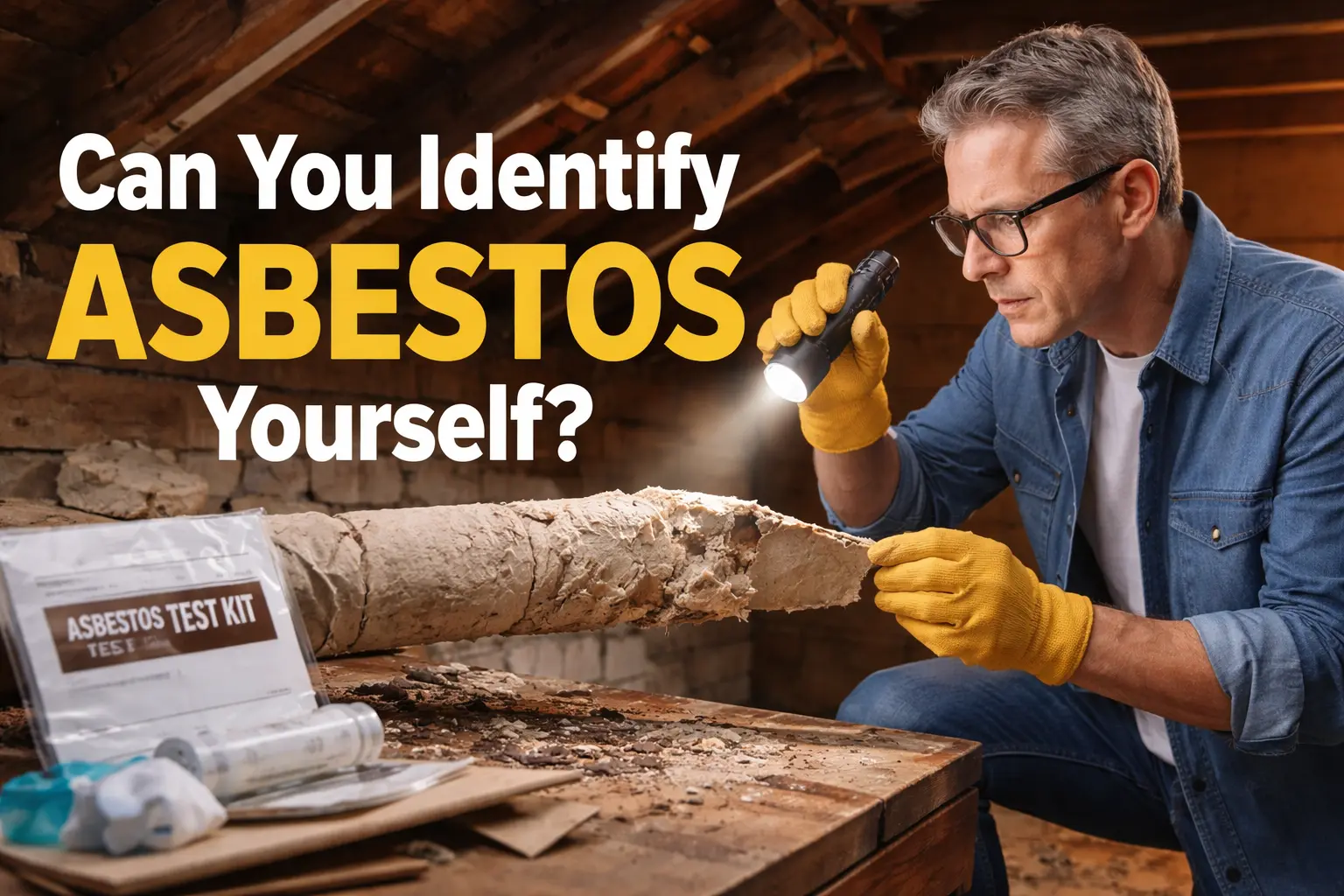
Can You Identify Asbestos Yourself? A Clear, Honest Guide for Homeowners
If you own an older home, one question can suddenly ruin your peaceful weekend:
“Can I identify asbestos myself?”
You see a cracked ceiling tile. You notice old pipe insulation. You start Googling. Ten minutes later, you’re convinced your house is plotting against you.
Let’s slow down.
This guide answers the real user question in a clear, fact-based way. No fear tactics. No made-up stats. No drama. Just practical advice based on guidance from trusted authorities like the U.S. Environmental Protection Agency (EPA), Centers for Disease Control and Prevention (CDC), and World Health Organization (WHO).
By the end, you’ll know:
- Whether you can identify asbestos on your own
- What signs you can realistically look for
- Why visual identification doesn’t work
- When testing becomes necessary
- What not to do under any circumstances
Let’s get straight to it.
What Is Asbestos (And Why People Still Worry About It)?
Asbestos refers to a group of naturally occurring mineral fibers. Manufacturers used these fibers widely in construction because they resist heat, fire, and chemicals. They also strengthen cement and insulation.
According to the EPA, asbestos was commonly used in building materials before the 1980s in the United States. Many countries followed similar usage patterns.
Asbestos becomes dangerous when materials break, crumble, or get disturbed. That’s when microscopic fibers can enter the air. If someone inhales those fibers over time, serious diseases may develop, including:
- Mesothelioma
- Lung cancer
- Asbestosis
The CDC confirms that inhaling asbestos fibers creates health risks. You cannot see these fibers with your eyes.
That detail matters more than anything else in this article.
Can You Identify Asbestos Yourself?
Short Answer: No, Not Reliably
You cannot confirm asbestos just by looking at a material.
The EPA clearly states that you cannot determine whether a material contains asbestos by visual inspection alone. Many asbestos-containing materials look identical to non-asbestos products.
That means:
- Texture doesn’t prove anything
- Color doesn’t prove anything
- Age doesn’t guarantee anything
- Your neighbor’s guess doesn’t prove anything
You might suspect asbestos. You cannot confirm it without laboratory testing.
Let’s break this down properly.
Why Visual Identification Does Not Work
People often believe they can “spot” asbestos. The internet doesn’t help. You’ll find photos labeled “this is asbestos tile” or “this is asbestos insulation.”
Here’s the problem:
Many non-asbestos materials look exactly the same.
For example:
- Modern cement boards can look like asbestos cement boards.
- Fiberglass insulation can resemble older asbestos insulation.
- Vinyl flooring without asbestos can look identical to older asbestos vinyl tiles.
The fibers themselves are microscopic. You cannot see them floating in the air. You cannot smell them. You cannot taste them.
The WHO explains that asbestos fibers are extremely small and invisible to the naked eye. So if someone claims they can “see asbestos dust,” they are guessing.
And guessing does not protect your health.
When Should You Suspect Asbestos?
While you cannot confirm asbestos yourself, you can assess risk factors.
Here’s what experts suggest you consider.
1. Age of the Building
If your home was built before the 1980s, the risk increases.
The EPA reports that asbestos use declined significantly after regulations tightened in the late 1970s and 1980s. However, some products remained in use even after that period.
Older buildings may contain asbestos in:
- Insulation
- Flooring
- Roofing materials
- Textured ceiling coatings
If your house was built after the 1990s, the risk decreases significantly in many regions. But always verify local building regulations.
2. Location of the Material
Certain materials historically contained asbestos more often than others.
According to the EPA and CDC, common asbestos-containing materials (ACMs) included:
- Pipe insulation
- Boiler insulation
- Vinyl floor tiles (especially 9×9 inch tiles)
- Cement siding and roofing
- Popcorn ceilings
- Joint compound
- Spray-applied fireproofing
But remember: similar materials may not contain asbestos.
Suspicion does not equal confirmation.
3. Condition of the Material
The EPA emphasizes that asbestos poses the greatest risk when materials become damaged or friable (easily crumbled).
If a suspected material remains intact and undisturbed, it often presents lower immediate risk.
Cracked, sanded, drilled, or crumbling materials create greater concern.
Still, visual condition tells you about potential exposure risk. It does not confirm asbestos presence.
Can DIY Asbestos Test Kits Solve the Problem?
Now we reach the gray area.
Yes, DIY asbestos test kits exist.
But here’s how they actually work:
- You collect a small sample.
- You send it to a certified laboratory.
- The lab analyzes it using specialized microscopy.
The confirmation still comes from a laboratory — not your eyes.
The EPA recommends that trained professionals collect samples because disturbing materials incorrectly can release fibers.
If you choose a mail-in kit, you must follow instructions very carefully. Improper sampling can increase exposure risk.
So the real answer remains consistent:
You cannot identify asbestos yourself. Only laboratory analysis can confirm it.
What Happens During Professional Asbestos Testing?
Understanding the process helps reduce fear.
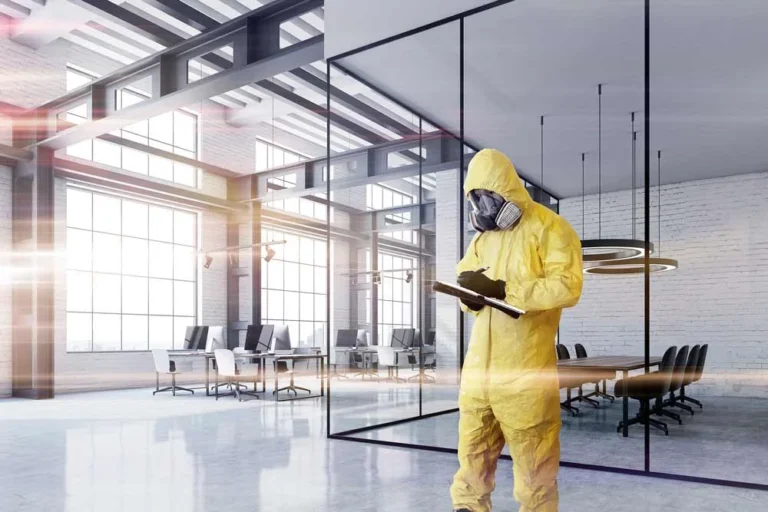
A licensed asbestos inspector typically:
- Conducts a visual assessment.
- Identifies suspect materials.
- Carefully collect small samples.
- Sends samples to an accredited laboratory.
Labs use methods like Polarized Light Microscopy (PLM) to identify asbestos fibers. These methods follow regulatory standards.
You cannot replicate this process at home with a flashlight and optimism.
Common Myths About Identifying Asbestos
Let’s clear up some internet confusion.
Myth 1: “If It Looks Fibrous, It’s Asbestos”
Wrong.
Many non-asbestos materials have a fibrous texture. Fiberglass insulation, cellulose insulation, and mineral wool all look fibrous.
Only lab analysis confirms asbestos.
Myth 2: “Only White Materials Contain Asbestos”
False.
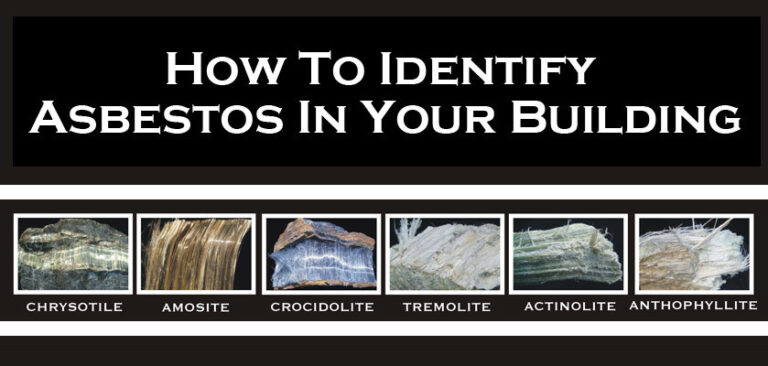
Asbestos fibers come in several types, including:
- Chrysotile (white)
- Amosite (brown)
- Crocidolite (blue)
Color alone means nothing.
Myth 3: “If It’s Old, It Definitely Has Asbestos”
Not always.
Age increases probability. It does not guarantee asbestos content.
Builders used many different materials, even in the same era.
Myth 4: “You Can Smell Asbestos”
No.
Asbestos has no smell.
If something smells musty or dusty, you are detecting something else entirely.
What Should You Do If You Suspect Asbestos?
Now we move from theory to action.
If you suspect asbestos, follow these steps:
1. Do Not Disturb It
Avoid drilling, sanding, scraping, or breaking the material.
Disturbance creates airborne fibers.
2. Limit Access
Keep children and pets away from the area.
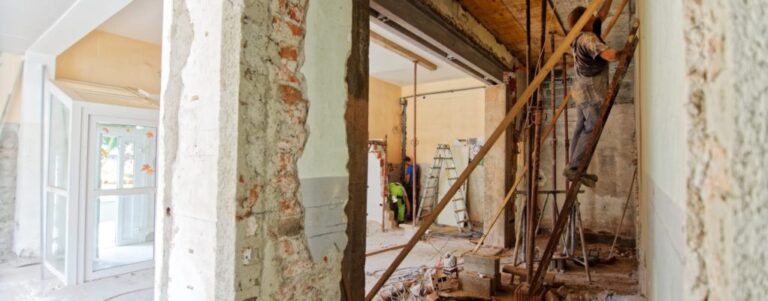
3. Avoid Panic Renovations
Home improvement projects often increase exposure risk.
4. Contact a Licensed Professional
An asbestos inspector can evaluate the material properly.
The EPA strongly advises using trained professionals for testing and removal.
Is It Always Necessary to Remove Asbestos?
No.
This surprises many homeowners.
According to the EPA, asbestos-containing material that remains in good condition often does not require removal.
In some cases, professionals may recommend:
- Encapsulation (sealing the material)
- Enclosure (covering the material)
Removal becomes necessary when materials become damaged or renovation will disturb them.
Sometimes leaving intact asbestos undisturbed creates less risk than removing it improperly.
That logic may feel counterintuitive, but it aligns with public health guidance.
Why DIY Removal Is a Bad Idea
YouTube makes everything look easy.
Asbestos removal is not a weekend hobby.
Improper removal can:
- Release fibers into the air
- Contaminate other areas of your home
- Expose family members
- Create legal issues
Many regions require licensed contractors for asbestos abatement.
Check your local regulations before taking action.
Health Risks: Why Accuracy Matters
The WHO and CDC both confirm that asbestos exposure increases the risk of serious diseases, especially after prolonged exposure.
But here’s the key detail:
Disease risk typically relates to the amount and duration of exposure.
One glance at an old tile does not equal instant illness.
Calm, informed action protects you better than fear-based decisions.
Can You Identify Asbestos in the Air?
No.
Airborne asbestos fibers remain invisible.
Only specialized air monitoring equipment can detect fiber concentration.
If you suspect contamination after disturbance, contact environmental professionals who conduct air sampling.
Final Answer
You cannot reliably identify asbestos yourself by sight, smell, or touch.
You can:
- Assess risk factors
- Consider building age
- Evaluate material condition
- Avoid disturbing suspect materials
But only laboratory analysis confirms asbestos.
Professional inspection protects your health, your family, and your property value.
Key Takeaways
- Visual inspection cannot confirm asbestos.
- Older buildings carry higher risk.
- Intact asbestos materials often pose lower risk if undisturbed.
- Laboratory testing provides confirmation.
- Professional guidance prevents exposure.
You don’t need fear.
You need facts.
And now you have them.