Asbestos-Containing Materials (ACMs) in Buildings and Homes: A Complete Guide
Asbestos-containing materials (ACMs) were widely used in residential, commercial, and industrial buildings because of their strength, heat resistance, durability, and insulating properties. These materials appeared in flooring, ceiling finishes, insulation, roofing products, wall compounds, and other construction components. Although many asbestos uses have been restricted or discontinued, older buildings may still contain materials manufactured with asbestos.
Understanding where asbestos-containing materials may be found helps homeowners, property managers, contractors, and renovation professionals make informed decisions about building maintenance and safety. However, identifying a material that looks old or unusual does not confirm that it contains asbestos. Laboratory analysis by a qualified professional is the reliable way to establish its composition.
This guide explains common asbestos-containing building materials, where they may occur, why their condition matters, and what to consider before repairing, renovating, or demolishing an older property. Learn more about asbestlint.
What Are Asbestos-Containing Materials?
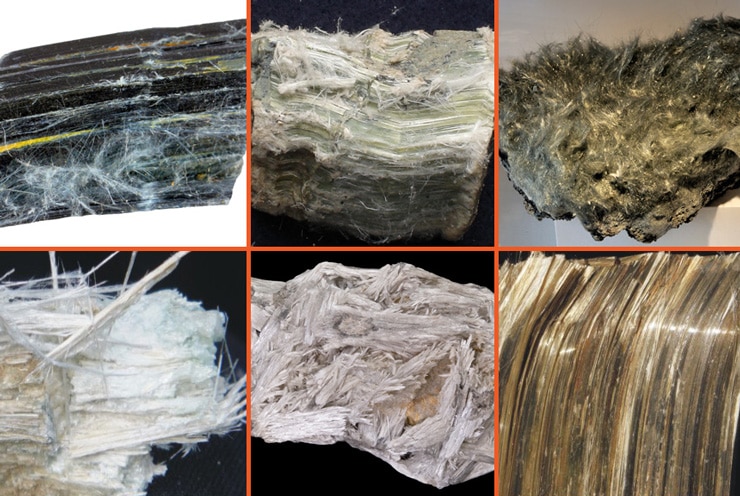
Asbestos-containing materials are products or building components that contain asbestos fibers. Asbestos refers to a group of naturally occurring fibrous minerals historically incorporated into various manufactured products.
Manufacturers used asbestos for several practical reasons. Its fibers can reinforce materials, resist heat, provide thermal insulation, and improve durability. Depending on the product, asbestos fibers were mixed with cement, vinyl, plaster-based compounds, insulation materials, or other binding agents.
For a broader introduction to asbestos composition and its properties, see [What Is Asbestos Made Of].
The term asbestos-containing material does not describe one specific product. It covers a wide range of materials with different compositions, physical properties, and potential exposure risks.
Some ACMs contain asbestos fibers within a relatively solid matrix, while others have a loose, fibrous, or easily damaged structure. The condition of the material, the likelihood of disturbance, and the work being performed all influence the potential for fiber release.
Common Types of Asbestos-Containing Building Materials
Asbestos appeared in numerous construction products, but not every product of a particular type contains asbestos. Its presence depends on factors such as manufacturing date, product formulation, manufacturer, country, and subsequent renovation history.
The following categories represent important areas to consider when assessing older buildings.
1. Ceiling Materials
Ceilings are among the building components that may warrant attention during renovation, particularly when older textured finishes, ceiling tiles, or associated compounds are present.
Some historical ceiling products contained asbestos for texture, insulation, sound control, or fire resistance. However, visual appearance alone cannot establish whether a ceiling contains asbestos.
Textured and Popcorn Ceilings
Popcorn ceilings have a rough, stippled, or cottage-cheese-like texture. Certain older textured ceiling products contained asbestos, but many others did not.
The installation date may help a professional assess the likelihood of asbestos, although renovation records and product information can be equally important.
For a historical overview, read [When Did They Stop Using Asbestos in Popcorn Ceilings?]. For material-specific information, see [Asbestos Popcorn Ceiling].
Do not scrape, sand, drill, or remove a suspected asbestos-containing ceiling simply to examine it. Such activities can release fibers if the material contains asbestos.
Ceiling Tiles
Older ceiling tiles and associated ceiling systems may contain asbestos in some circumstances. The material can differ depending on whether the building uses decorative tiles, acoustic panels, insulating boards, or other ceiling components.
Learn more in [Asbestos Ceiling Tiles].
Before replacing damaged ceiling tiles or installing new fixtures, consider whether the work could disturb the original material. A qualified asbestos professional can determine whether inspection and testing are appropriate.
2. Flooring Materials
Flooring is another important category because asbestos was incorporated into certain vinyl tiles, sheet flooring backings, and related products.
Some older flooring materials remain intact beneath carpets, laminate, or newer flooring layers. Their presence may not be obvious during a routine property inspection.
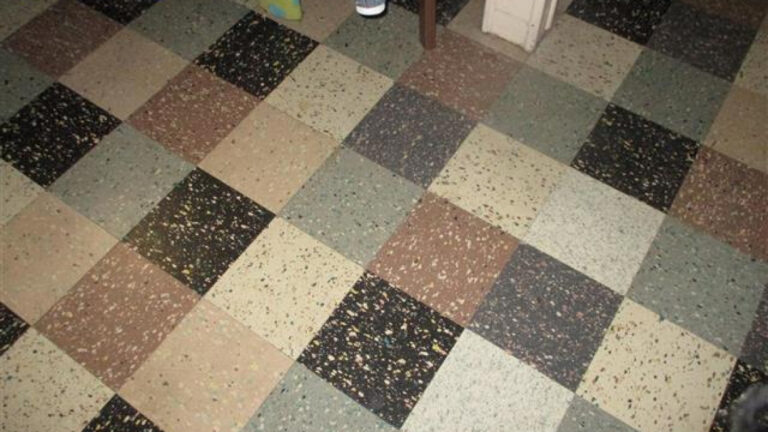
Vinyl Floor Tiles
Certain vinyl floor tiles were manufactured with asbestos to improve strength and durability. Some historical products used different formulations, so neither the tile’s age nor its appearance provides a definitive answer.
For more detail, visit [Asbestos in Vinyl Flooring] and [Asbestos Floor Tiles].
A professional may consider the product’s installation history, dimensions, appearance, and available records when deciding whether testing is necessary. These characteristics can guide an assessment but cannot confirm asbestos content.
Linoleum and Sheet Flooring Backing
The term linoleum is often used informally for different types of resilient flooring, including vinyl products. True linoleum and vinyl flooring are not the same material, so they should not be treated as interchangeable when discussing asbestos.
Some historical sheet flooring products had asbestos-containing backing or adhesives. The backing may be concealed beneath the visible surface and can be more vulnerable to disturbance during removal.
Read [Asbestos in Linoleum Backing] for a focused discussion of this topic.
Avoid dry scraping, sanding, or mechanically grinding suspect flooring and backing. If renovation will disturb these materials, seek advice from a qualified professional before work begins.
3. Insulation Materials
Insulation is a significant category of historical asbestos use. Certain asbestos-containing products were used to reduce heat transfer, protect equipment, and provide fire resistance.
Possible locations include:
- Insulation around older pipes and boilers.
- Insulating materials around heating equipment.
- Some older insulating boards and fire-resistant panels.
- Certain historical insulation products in walls, ceilings, and service areas.
The appearance and condition of insulation vary considerably. Some products may look like ordinary fibrous insulation, while others are concealed inside walls, service ducts, or equipment enclosures.
For more information about this category, see [Asbestos Insulation].
Do not pull apart, cut, or handle suspected asbestos insulation. Damaged or deteriorating insulation should be assessed by a qualified professional, particularly when maintenance or replacement work could disturb it.
4. Roofing and Siding Materials
Asbestos was also used in some roofing and exterior cladding products. In certain historical applications, asbestos fibers were combined with cement to produce relatively durable sheets, shingles, or panels.
These products may be encountered on older homes, garages, sheds, and other structures. Their presence cannot be confirmed by color, shape, surface texture, or age alone.
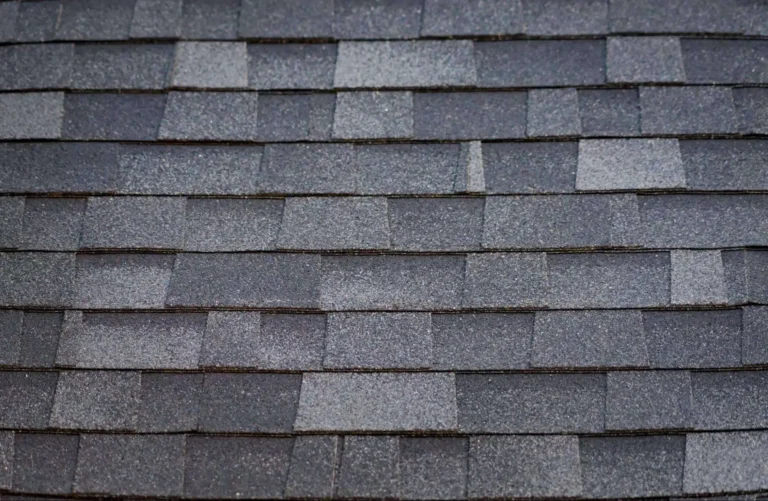
Asbestos Roofing Shingles
Some historical roofing shingles contained asbestos. They were used in particular roofing systems because the material offered durability and resistance to heat.
For further information, see [Asbestos Shingles].
Weathering, cracking, storm damage, and maintenance activities can affect the condition of roofing products. Suspected asbestos-containing shingles should not be broken, cut, or removed without an appropriate assessment and safe work plan.
Asbestos Siding
Certain historical siding products contained asbestos, commonly in fiber-cement formulations. Older exterior panels may remain in place even when the original building has undergone other renovations.
Explore [Asbestos Siding] to learn more about this specific application.
For a comparison with modern alternatives, read [Asbestos Shingles vs Fiber Cement]. Modern fiber-cement products are not automatically asbestos-containing; product composition depends on the actual product and its manufacturing history.
5. Wall Materials and Joint Compounds
Asbestos was used in some historical wall systems, patching compounds, textured coatings, and joint compounds. These materials could be applied during construction, repair, or finishing.
The main concern is that a seemingly ordinary wall or ceiling surface may contain a material that becomes disturbed during drilling, sanding, cutting, or demolition.
Drywall Joint Compound
Drywall itself and the compounds used to finish its joints are different components. Some historical joint compounds contained asbestos, while many drywall products and compounds did not.
Learn more in [Asbestos Drywall Joint Compound].
Before cutting openings for electrical wiring, removing wall panels, or sanding old joint compound, consider the building’s history and whether the work will disturb suspect materials. Professional assessment and appropriate testing may be necessary.
6. Other Materials in Older Buildings
The materials discussed above are not an exhaustive list. Asbestos was used in various historical construction products, and some components may be concealed behind finished surfaces.
Depending on the building and its history, other potential locations include certain fireproofing materials, pipe coverings, insulation boards, textured coatings, and products associated with older heating systems.
For a wider overview, consult [Common Types of Asbestos Materials].
The presence of any one material does not establish that the entire building contains asbestos. Each suspect component must be considered in its own context.
Where Can Asbestos-Containing Materials Be Found in Homes?
The possible locations of ACMs depend on the building’s age, construction methods, past repairs, and product history. A single property may contain several different building materials installed at different times.
Older Residential Properties
Older houses may have original ceiling finishes, resilient flooring, insulation, siding, or joint compounds that warrant assessment before renovation.
For a broader residential overview, read [Asbestos in Homes].
Homeowners should review available renovation records and identify areas likely to be disturbed by planned work. An older house does not automatically contain asbestos, and the age of the building alone cannot confirm the presence of any particular ACM.
Commercial and Industrial Buildings
Offices, factories, warehouses, schools, and other non-residential properties may contain a wider variety of historical construction and equipment-related materials.
Potential locations can include service rooms, plant areas, pipework, fire-resistant panels, suspended ceilings, and older wall or floor finishes.
See [Asbestos in Old Buildings] for additional context.
Building owners and managers should consider asbestos information when arranging maintenance, upgrading utilities, refurbishing occupied areas, or planning demolition. A suitable survey and management process can help identify materials that could be disturbed.
Renovated Buildings
Renovation does not necessarily eliminate asbestos from a property. New finishes may cover older flooring, wall compounds, ceilings, or other components.
As a result, the visible age of an interior may not reflect the age of the materials underneath it.
Before opening walls, removing flooring, or modifying ceilings, review existing survey reports and renovation records where available. If suspect materials could be disturbed, obtain appropriate professional advice before proceeding.
How Can You Identify Asbestos-Containing Materials?
One of the most important points about asbestos safety is that you cannot reliably identify asbestos by sight alone.
Color, texture, age, shape, and installation location may provide clues about a product’s history, but none proves that it contains asbestos. Many asbestos-containing products resemble asbestos-free alternatives.
A careful assessment generally involves the following steps:
- Review the building’s history. Construction dates, renovation records, invoices, and original product documentation may help identify materials that warrant further investigation.
- Locate suspect materials without disturbing them. Note the component’s location and visible condition from a safe distance. Do not scrape, drill, break, or collect samples yourself.
- Review existing asbestos records. Previous surveys, laboratory reports, and building management documents may already contain relevant findings.
- Arrange professional assessment where appropriate. A qualified asbestos professional can evaluate the material and determine whether sampling is necessary.
- Use a qualified laboratory. Laboratory analysis of an appropriately collected sample is the reliable way to confirm asbestos content.
For more detail about visual identification, see [How Can You Tell If a Floor Tile Has Asbestos?].
A suspected material should not be declared asbestos-free simply because it looks modern, feels solid, or resembles a familiar construction product.
Why the Condition of ACMs Matters
The presence of asbestos in a building does not automatically mean that occupants are being exposed to airborne fibers.
The condition of the material and the likelihood of disturbance are important factors in assessing potential risk. Intact materials that remain undisturbed may present a lower immediate risk than damaged, deteriorating, or improperly handled materials.
Intact Materials
Some asbestos-containing materials are bound within a solid product matrix. When these materials remain in good condition and are not disturbed, they may release fewer fibers than damaged or friable materials.
Where appropriate, professional guidance may support leaving the material in place and monitoring its condition rather than removing it unnecessarily.
Damaged or Deteriorating Materials
Cracking, crumbling, fraying, exposed insulation, or damage from water and maintenance may warrant professional assessment.
Do not sweep, brush, sand, vacuum with an ordinary household vacuum, or otherwise disturb suspected asbestos debris. Avoid activities that could spread dust into adjacent areas.
If damage has occurred, stop work and prevent others from entering the affected area until appropriate advice is obtained.
Renovation and Demolition
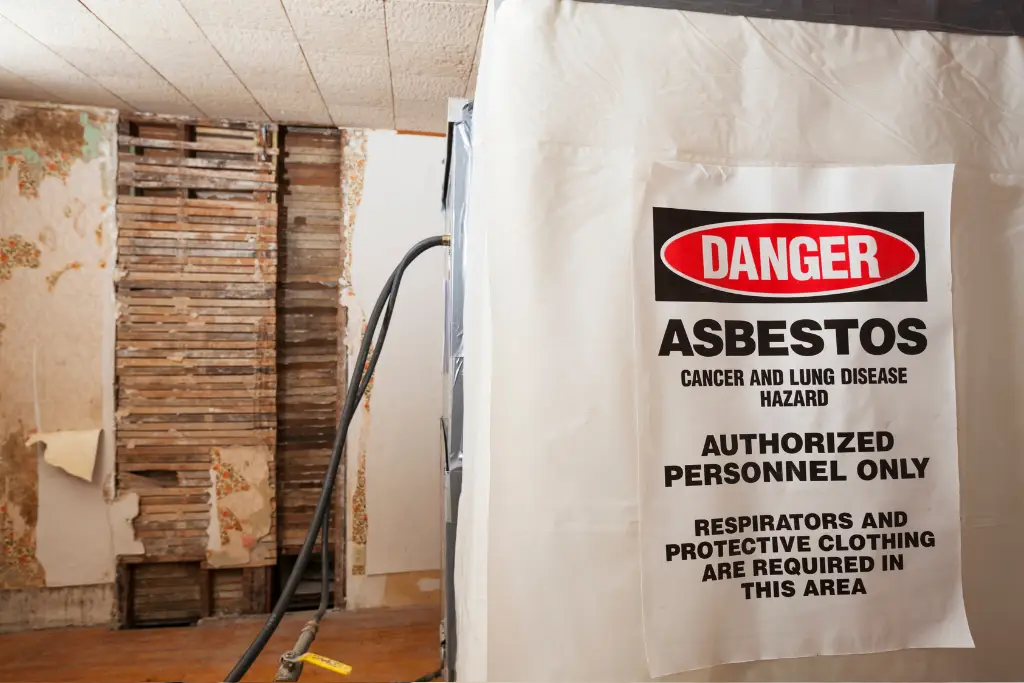
Renovation and demolition can disturb concealed materials that were previously stable. Cutting, drilling, sanding, scraping, and breaking building components may release asbestos fibers if the materials contain asbestos.
Before beginning work on an older building, establish whether an asbestos survey or other assessment is needed. The scope of the assessment should reflect the planned work and applicable local requirements.
The U.S. Environmental Protection Agency recommends professional sampling when suspect materials are damaged or renovation will disturb them. It also advises against collecting samples without appropriate training because improper sampling can increase exposure risk.
Health Risks Associated With Asbestos-Containing Materials
The principal health concern associated with asbestos is the inhalation of airborne fibers. Exposure can cause serious diseases, including mesothelioma, asbestosis, and asbestos-related lung cancer.
These diseases may take many years to develop. Risk depends on factors such as exposure intensity, duration, fiber characteristics, and individual circumstances.
The mere presence of an asbestos-containing product does not establish that a person has been exposed. Exposure becomes a concern when fibers are released into the air and inhaled.
This distinction is important because unnecessary disturbance can create a hazard that might otherwise have been avoided through appropriate management.
Homeowners, maintenance workers, contractors, and building managers should therefore treat suspected materials cautiously and seek qualified advice before undertaking work that could release fibers.
What Should You Do If You Suspect ACMs on Your Property?
If you discover a material that may contain asbestos, take a cautious, practical approach.
Do not disturb the material. Avoid drilling, cutting, scraping, sanding, breaking, or attempting to remove it. Do not take a sample yourself.
Assess whether the material has been damaged. Without touching it, observe whether it appears cracked, crumbling, frayed, or otherwise deteriorated. Avoid inspecting it at close range if doing so would expose you to dust or debris.
Consider the planned activity. If renovation, maintenance, or demolition could disturb the material, pause the affected work until its status has been assessed.
Seek qualified professional advice. An asbestos professional can determine whether a survey, sampling, laboratory analysis, repair, enclosure, or removal is appropriate.
Keep records. Document confirmed ACM locations, their condition, assessment results, and any management decisions. For larger properties, this information can support maintenance planning and help prevent accidental disturbance.
Follow applicable regulations. Requirements for asbestos surveys, worker training, removal, transportation, and disposal vary by jurisdiction and building type. Check the rules that apply to your location and project.
Should Asbestos-Containing Materials Always Be Removed?
No. Removal is not automatically the safest or most appropriate response to every asbestos-containing material.
If an ACM is in good condition, is unlikely to be disturbed, and can be managed safely, leaving it in place may be a suitable option. A professional can recommend monitoring, repair, enclosure, encapsulation, or removal based on the material’s condition and the circumstances.
Removal may be necessary when the material is deteriorating, presents a significant exposure risk, or must be disturbed for renovation or demolition. Such work should be planned and carried out by appropriately qualified professionals under the applicable requirements.
Attempting removal without suitable training, equipment, containment, and waste-management procedures can increase the risk of exposure.
The appropriate decision should therefore follow a risk assessment rather than assumptions based solely on a material’s age or appearance.
Conclusion
Asbestos-containing materials can occur in a wide range of older building components, including ceiling finishes, flooring, insulation, roofing, siding, and wall compounds. However, not every product in these categories contains asbestos, and visual inspection alone cannot establish its presence.
Understanding the building’s history, recognizing materials that warrant assessment, and avoiding unnecessary disturbance are important steps in managing potential asbestos risks.
If a suspected material is damaged or could be affected by renovation, consult a qualified asbestos professional and arrange appropriate laboratory testing where necessary. Depending on the findings, the safest approach may involve monitoring, repair, enclosure, or professional removal.
A well-informed approach helps property owners and building professionals make safer decisions while avoiding unnecessary disturbance of materials that may contain asbestos.
Frequently Asked Questions
1. What are asbestos-containing materials?
Asbestos-containing materials (ACMs) are building products or components that contain asbestos fibers. Historical examples include certain insulation products, ceiling finishes, floor tiles, roofing shingles, siding, and joint compounds.
2. Which building materials may contain asbestos?
Some older ceiling tiles, textured ceiling finishes, vinyl floor tiles, sheet flooring backings, insulation products, roofing materials, siding, and joint compounds may contain asbestos. Not every product in these categories contains it.
3. Can you identify asbestos by looking at a material?
No. Appearance, color, texture, and age cannot reliably confirm asbestos content. Appropriate professional sampling and laboratory analysis are needed to establish whether a suspect material contains asbestos.
4. Are asbestos-containing materials always dangerous?
Not necessarily. The potential risk depends partly on the material’s condition and whether it releases airborne fibers. Damaged or disturbed materials may pose greater concerns than intact materials that remain undisturbed.
5. Should I remove asbestos from an older home?
Not automatically. Depending on its condition and the likelihood of disturbance, a professional may recommend leaving it in place, monitoring it, repairing or enclosing it, or arranging controlled removal.
6. What should I do before renovating an older building?
Review existing asbestos records, identify suspect materials, and obtain professional advice before work that could disturb them. Do not drill, scrape, sand, or remove suspected ACMs until their status and the appropriate safety measures have been established.