Asbestos Shingles vs Fiber Cement: Key Differences, Risks, and Modern Alternatives
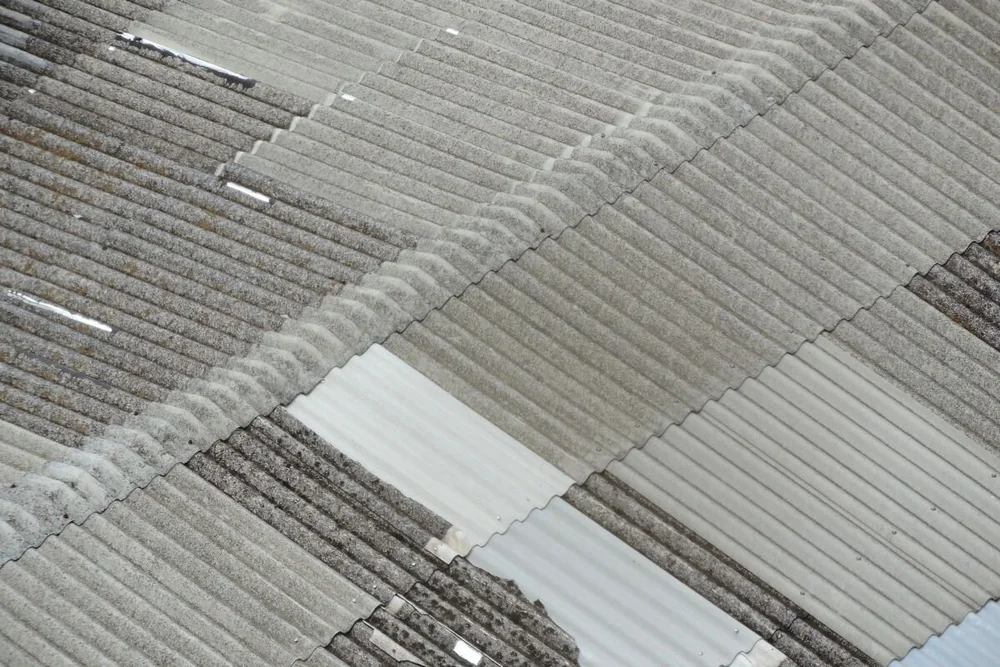
When comparing asbestos shingles vs fiber cement, many property owners and professionals face confusion because the two materials often look alike yet behave very differently in terms of safety, performance, and long-term risk.
Asbestos siding was once celebrated for its fire resistance and durability, but decades later it is widely recognized as a serious health hazard. Fiber cement, on the other hand, was developed as a safer, high-performance alternative that delivers similar durability without the toxic exposure.
This guide explains what asbestos siding looks like, whether asbestos siding is dangerous, how fiber cement differs, what happens when asbestos cement sheets are broken, whether encapsulation and painting are safe, and how professionals can safely manage older buildings that still contain asbestos materials.
What Is Asbestos Siding and Why It Was Widely Used
Material Composition
Asbestos siding is a cement-based exterior cladding reinforced with asbestos fibers for strength and heat resistance. These rigid shingles and boards were mass-produced for residential and commercial buildings from the 1920s through the late 1970s.
Typical asbestos cement products contained:
- 10–25% chrysotile asbestos
- Portland cement
- Silica and fillers
Asbestos fibers were added to improve:
- Tensile strength
- Fire resistance
- Weather durability
- Resistance to insects and rot
Why Builders Preferred Asbestos Shingles
Contractors originally chose asbestos siding because it offered:
- Exceptional fire resistance
- Long lifespan exceeding 40–60 years
- Minimal repainting needs
- Low water absorption
- Resistance to termites and fungal decay
At the time, the health effects of airborne asbestos fibers were not yet widely documented.
What Fiber Cement Siding Is Made Of
Fiber Cement Composition
Unlike asbestos siding, fiber cement does not contain asbestos. It is manufactured using:
- Portland cement
- Silica sand
- Cellulose (wood pulp) fibers
- Water
These materials are compressed and cured under high pressure, producing a strong, non-combustible exterior cladding.
Is Fibre Cement Asbestos?
No. Modern fiber cement products are 100% asbestos-free. After global asbestos bans expanded in the 1980s and 1990s, manufacturers permanently replaced asbestos fibers with organic cellulose reinforcements.
Fiber cement now meets the safety standards of organizations such as World Health Organization and Environmental Protection Agency.
Asbestos Shingles vs Fiber Cement – Visual & Physical Comparison
Physical Characteristics
| Feature | Asbestos Shingles | Fiber Cement |
| Installation era | 1920–1980 | 1990–present |
| Fiber type | Toxic asbestos | Safe cellulose |
| Board length | Short (≈ 5–6 ft) | Long (up to 12 ft) |
| Surface | Chalky, brittle with age | Smooth, uniform |
| Weight | Very heavy | Heavy but manageable |
| Break behavior | Crumbles, releases fibers | Snaps cleanly |
| Health risk | High when disturbed | No asbestos hazard |
What Does Asbestos Siding Look Like
- Grey or off-white cement color
- Small rectangular shingles
- Wood-grain texture pressed into cement
- Often brittle with chipped edges
- Powdery residue as it ages
These features often appear in asbestos siding pictures and asbestos shingles vs fiber cement pictures, yet appearance alone is never enough for confirmation.
Is Asbestos Siding Dangerous? The Real Health Risk
How Exposure Occurs
Asbestos cement is stable when intact, but when disturbed it releases microscopic fibers that can become airborne and lodge in lung tissue. This commonly occurs during:
- Cutting or drilling
- Pressure washing
- Breaking damaged sheets
- Removal during renovation
Documented Health Effects
According to data supported by World Health Organization:
- Over 125 million people worldwide are still exposed to asbestos occupationally.
- Asbestos exposure causes over 107,000 deaths annually from lung cancer, mesothelioma, and asbestosis.
Latency is long — 20 to 40 years between exposure and disease diagnosis — making early prevention critical.
What Happens When Asbestos Cement Sheets Break
Asbestos Cement Sheet Broken – Why It’s Dangerous
When asbestos-cement sheets break:
- The cement matrix fractures.
- Asbestos fibers become airborne.
- Dust is invisible and odorless.
- Fibers remain suspended for hours.
Even minor cracking can release thousands of respirable fibers per cubic meter of air.
What Professionals Should Never Do
- Never sweep or vacuum asbestos debris.
- Never dry-cut or grind asbestos siding.
- Never pressure-wash aging asbestos shingles.
- Never dispose of asbestos in regular construction waste.
Asbestos Siding Encapsulation – A Controlled Safety Approach
What Encapsulation Means
Encapsulation involves sealing the asbestos surface without removing it using:
- Thick elastomeric coatings
- Specialized masonry sealants
- Protective cladding systems
It prevents fiber release while avoiding demolition risks.
When Encapsulation Is Appropriate
Encapsulation is accepted when:
- Shingles are structurally sound
- There is no crumbling or breakage
- No major renovation is planned
- Local regulations permit encapsulation
This approach significantly reduces exposure risk while deferring full abatement.
Painting Asbestos Siding – What’s Safe and What’s Not
Can You Paint Asbestos Siding?
Yes, painting asbestos siding is allowed when:
- The surface is intact
- No sanding or grinding is performed
- Only low-pressure washing is used
- Specialized bonding primers are applied
Painting actually improves encapsulation when done correctly.
Unsafe Painting Practices
Avoid:
- Power sanding
- Scraping with metal tools
- Dry brushing damaged edges
These actions release asbestos fibers directly into breathing space.
Performance & Lifespan – Asbestos vs Fiber Cement
Structural Longevity
- Asbestos shingles: 40–70 years
- Fiber cement: 50+ years with warranty coverage
Weather & Fire Performance
Both materials are:
- Non-combustible
- Resistant to rot and insects
- Stable under temperature change
However, fiber cement:
- Handles freeze-thaw better
- Does not become brittle with age
- Resists UV degradation more effectively
Installation & Renovation Considerations
Installing Fiber Cement
- Requires carbide-tipped cutting tools
- Silica dust precautions needed
- No hazardous waste handling
- Standard building permits apply
Removing Asbestos Shingles
- Requires certified asbestos abatement contractors
- Workers must use:
- HEPA respirators
- Full protective suits
- Negative-pressure containment
- HEPA respirators
- Disposal must follow hazardous waste laws
Removal often costs 3–6 times more than installing new fiber cement due to safety requirements.
Regulatory Status & Legal Liability
Global Restrictions
Asbestos siding is:
- Fully banned in over 65 countries
- Strictly regulated under occupational safety laws
- Subject to hazardous waste disposal rules
In many regions, improper removal can result in:
- Heavy fines
- Project shutdowns
- Legal action from occupants
Fiber cement carries no such regulatory burden.
Cost Comparison Over Lifecycle
| Expense Category | Asbestos Shingles | Fiber Cement |
| Initial material cost | Low (legacy) | Moderate |
| Maintenance | Moderate | Low |
| Painting | Moderate risk | Simple |
| Removal cost | Very high | Standard |
| Legal liability | High | Minimal |
| Resale impact | Negative | Positive |
Over a 30-year lifecycle, fiber cement is typically 40–60% cheaper once abatement, insurance, and resale impacts are included.
Professional Assessment – How to Identify Unknown Siding
Field Identification Clues
- Construction date before 1980
- Short shingle length
- Brittle edges
- No manufacturer safety labels
Laboratory Confirmation
Only microscopic analysis by a certified laboratory can definitively confirm asbestos content. Professionals should assume asbestos until proven otherwise.
Conclusion
The debate of asbestos shingles vs fiber cement is ultimately a matter of safety versus legacy risk. While asbestos cement once served as a high-performance miracle product, today it is a tightly regulated hazardous material. Fiber cement delivers equal or better durability, fire resistance, and weather protection — without the health consequences or legal exposure.
For professionals working with older structures, the safest path is:
- Identify before disturbing
- Encapsulate where appropriate
- Replace with fiber cement when renovation is planned
The true cost of asbestos is not just financial — it’s human. Would you rather preserve a hazardous legacy material, or invest in a safer future-proof alternative?
FAQs
Q1: Is asbestos siding always dangerous?
It is relatively low-risk when completely intact, but becomes highly dangerous when cracked, drilled, sanded, or broken.
Q2: Can fiber cement be mistaken for asbestos?
Yes, visually they can look similar, which is why laboratory testing is critical.
Q3: Does modern fiber cement contain asbestos?
No. All certified fiber cement products manufactured after the 1980s are asbestos-free.
Q4: What should I do if I find broken asbestos cement sheets?
Do not touch or clean them. Isolate the area and contact licensed asbestos abatement professionals immediately.
Q5: Is encapsulation better than removal?
Encapsulation can be a safe short-term solution when shingles are stable, but full replacement offers the greatest long-term safety.