Guide to Asbestlint, Dust Dynamics, and Fiber Identification
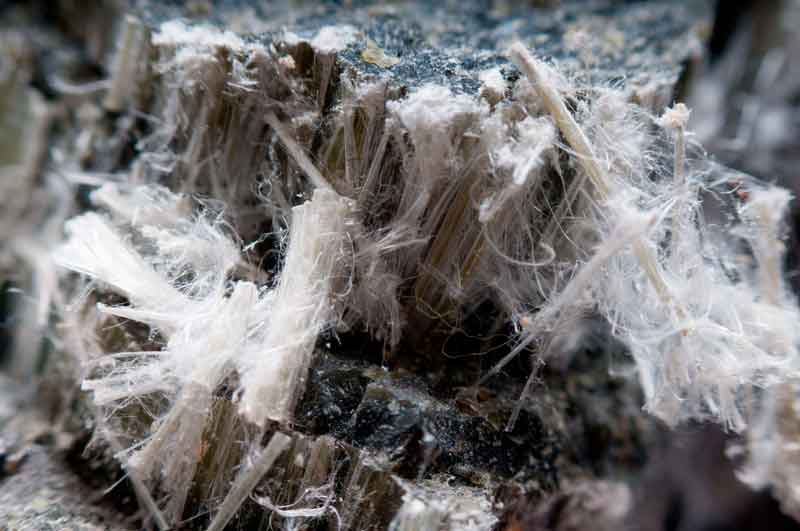
Introduction: Understanding Asbestlint, Dust, and Airborne Fibers
Asbestlint refers to an important distinction between ordinary household dust, textile lint, and potentially hazardous fibers released from certain building materials.
Everyday indoor dust can contain skin flakes, pollen, soil, pet dander, and textile fibers from clothing, furniture, and other household items.
However, activities such as drilling, cutting, or renovating asbestos-containing materials can release microscopic asbestos fibers that pose serious health risks when inhaled. Although ordinary lint and hazardous mineral fibers may both become airborne, their origins, properties, and potential health effects differ significantly.
Understanding these differences helps homeowners, tenants, maintenance workers, building managers, and renovators recognize potential environmental hazards, make informed decisions about indoor air quality, and take appropriate precautions when dealing with dust or suspected asbestos-containing materials.
What does Asbestlint mean?
Asbestlint is the central term used in this guide to explore the relationship between household lint, dust accumulation, airborne fibers, and asbestos awareness. It should not be presented as an established scientific name for a particular mineral, fiber, or recognized medical condition.
The term provides a starting point for understanding several connected subjects: where particles originate, how they move through indoor environments, why some materials require special precautions, and how people can respond to possible environmental hazards.
For instance, a homeowner who notices dust around an old ceiling may initially assume it is ordinary household debris. A closer look at the building’s history and the condition of its materials may reveal that further professional assessment is appropriate. The visible dust alone, however, cannot establish whether asbestos is present.
Throughout this guide, three principles remain important:
- Appearance is not proof: Ordinary lint and asbestos fibers cannot be reliably distinguished by looking at dust.
- The source matters: Textile fibers, ordinary dust, mold particles, and asbestos fibers have different origins and require different responses.
- Prevention is better than disturbance: Suspected asbestos-containing materials should not be cut, scraped, sanded, or sampled casually.
The following sections explain these principles in detail, from the basics of dust movement to professional asbestos assessment.
1. What Is Asbestlint? Understanding the Term and Its Context

To understand the AsbestLint topic properly, it helps to separate the term itself from established environmental science.
Asbestlint is used here as an educational umbrella topic covering lint, dust, fibers, and potential asbestos-related concerns. It does not mean that ordinary household lint contains asbestos, nor does it imply that every dusty area represents a health hazard.
The distinction becomes clearer when we examine three categories of material.
Household lint: Fibers from everyday materials
Household lint consists primarily of small fibers released from textiles and other everyday materials. Clothing, towels, blankets, carpets, curtains, and upholstered furniture can all contribute to lint accumulation.
Consider a household that frequently washes cotton clothing and uses blankets throughout the year. Small fibers may collect in the dryer filter, beneath furniture, along floor edges, or around laundry equipment. These deposits are generally associated with everyday textile use.
The quantity and appearance of lint depend on the fabrics involved, their age, how frequently they are used, and how they are washed or handled.
Household lint is not automatically hazardous simply because it contains fibers. However, excessive lint around a clothes dryer can create a fire risk, and airborne particles may aggravate certain sensitivities in some people. The appropriate response depends on the source and circumstances.
Ordinary dust: A mixture of different particles
Indoor dust is not a single substance. It is a mixture of particles that enter from outside or originate inside a building.
Outdoor sources may include soil, pollen, road dust, and pollution. Indoor sources may include textiles, skin flakes, pet dander, cooking particles, and materials released through normal wear.
Dust can also be generated during construction and maintenance activities. Sanding a wooden surface, drilling into masonry, or removing old building materials can produce particles whose composition depends on the material being disturbed.
A dusty windowsill, for example, may contain pollen and soil carried through an open window. Dust beneath a sofa may contain textile fibers and particles transferred from shoes. Neither observation establishes the presence of asbestos.
Asbestos fibers: A different category of concern
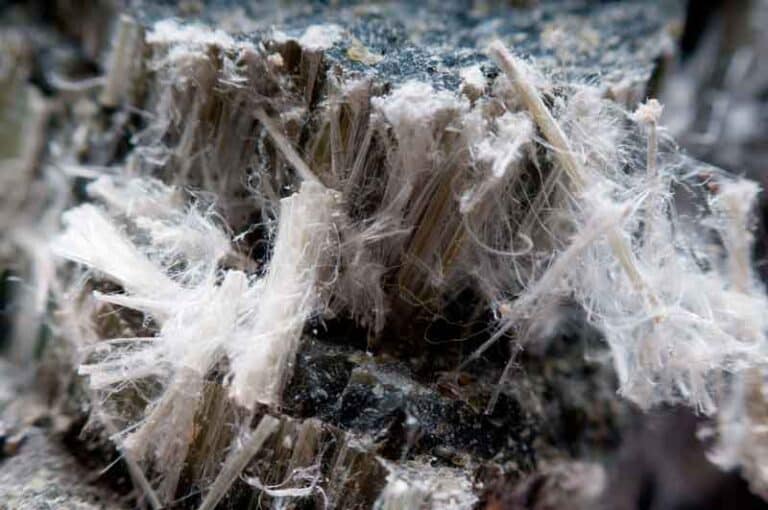
Asbestos refers to a group of naturally occurring fibrous minerals historically used in construction and industry because of properties such as heat resistance and durability.
Certain asbestos-containing products were used in insulation, cement products, flooring materials, roofing, textured finishes, and other building components. The exact products used varied by country, manufacturer, application, and period.
When asbestos-containing materials remain intact and are managed appropriately, the likelihood of fiber release may be lower than when they are damaged or disturbed. Cutting, drilling, sanding, scraping, demolition, or deterioration can release fibers into the surrounding environment.
Some fibers are too small to be seen without specialized equipment. Consequently, ordinary visual inspection cannot establish whether dust contains asbestos.
The World Health Organization identifies all major forms of asbestos as carcinogenic to humans. Preventing exposure is therefore an important part of building maintenance and renovation planning.
Why the distinction matters
Imagine finding a small amount of gray dust near a washing machine. It may simply be lint mixed with ordinary household dust. The sensible response would usually involve routine cleaning and checking the appliance.
Now imagine discovering crumbling insulation around an old pipe in a building where asbestos-containing materials may have been used. The same routine cleaning approach may be inappropriate because disturbing the debris could release hazardous fibers.
The difference is not the color of the dust. It is the possible source, material composition, and risk of disturbance.
2. How Dust Dynamics Work

Dust dynamics describes how particles are released, transported, suspended, deposited, and sometimes resuspended within an environment.
Understanding these processes explains why some surfaces accumulate dust quickly, why particles can travel between rooms, and why disturbing settled material may temporarily increase airborne particle concentrations.
Particle generation and release
Particles enter indoor air through natural processes and human activities.
Common sources include:
- Walking across floors and carpets.
- Handling clothing, blankets, and bedding.
- Cleaning shelves and furniture.
- Opening doors and windows.
- Operating certain appliances.
- Performing construction or renovation work.
- Disturbing damaged building materials.
The particles generated by these activities are not necessarily alike.
Walking across a carpet may release textile fibers and previously settled dust. Cutting concrete may generate mineral particles. Disturbing an asbestos-containing product may release asbestos fibers.
Understanding the source is essential because the correct control method depends on the material involved.
In building maintenance, identifying materials before intrusive work is particularly important. A renovation contractor should not assume that a product is safe to disturb simply because it resembles ordinary cement, plaster, or insulation.
Air movement and particle transport
Once particles enter the air, they can move with air currents.
Air movement inside a building is influenced by ventilation equipment, fans, heating and cooling systems, open windows, doors, temperature differences, and pressure differences between rooms.
For example, dust generated during routine cleaning may spread into nearby areas when a fan is running. Particles may also move through shared air pathways, depending on the building layout and ventilation system.
However, not all particles behave identically. Their movement depends on factors such as size, shape, density, and the strength and direction of the airflow.
This means that a particle released in one location may settle nearby, remain airborne for some time, or move into another area. The outcome depends on the specific conditions.
If asbestos-containing material has been disturbed, the possibility of particle transport is one reason to avoid using fans or other equipment that could spread contamination without a proper control plan.
Suspension and settling
Particles suspended in air do not remain airborne indefinitely under all conditions. Many eventually settle on surfaces, although the time required varies.
Relatively large particles may settle more quickly, while smaller particles can remain suspended longer, depending on airflow and other physical conditions.
Settling does not necessarily eliminate a hazard. A particle deposited on a floor, ledge, or piece of equipment may become airborne again if the surface is disturbed.
This process is known as resuspension.
For example, dry sweeping an ordinary dusty floor can redistribute particles into the air. If the debris is potentially contaminated with asbestos, dry sweeping may create a more serious problem by disturbing material that should be handled under appropriate controls.
Surface characteristics and dust accumulation
Some surfaces collect more visible dust than others.
Horizontal surfaces, decorative objects, floor edges, and areas behind furniture may accumulate particles because they are not cleaned frequently. Static electricity, surface texture, airflow patterns, and local activity can also influence where particles settle.
A smooth windowsill may be easy to inspect and clean. A textured ledge or the space behind a cabinet may hold dust that is difficult to remove during routine cleaning.
These differences explain why visible dust levels can vary across the same room. They do not, however, reveal the precise chemical or mineral composition of the deposited material.
Ventilation and filtration
Ventilation and filtration can support better indoor air quality, but they serve different purposes.
Ventilation exchanges indoor air with outdoor air when conditions permit. Filtration removes some particles from air passing through a suitable filter.
The effectiveness of either approach depends on the equipment, its condition, the filter type, airflow, and the pollutants involved.
A poorly maintained ventilation system may accumulate dust. A fan may redistribute particles rather than remove them. An air cleaner may reduce some airborne particles but cannot necessarily control the source of a contaminant.
If asbestos contamination is suspected, ordinary ventilation and filtration should not be treated as a substitute for appropriate source control and professional assessment.
3. How Asbestlint-Related Conditions Can Develop

Dust accumulation generally develops through several overlapping processes rather than a single cause.
For the purposes of this guide, the term refers to the development of lint and dust accumulation, airborne particles, and situations that may warrant asbestos awareness. It should not be interpreted as a separate medical or environmental diagnosis.
Continuous release of household fibers
Textiles release small fibers through ordinary use. Clothing rubs against other fabrics, blankets experience friction, and carpets receive repeated foot traffic.
These activities can gradually add fibers to indoor dust. The particles may settle on furniture, collect along floor edges, or become trapped in carpets and upholstery.
Households with many fabric-covered surfaces may experience different patterns of lint accumulation from homes with mostly hard flooring and minimal upholstery.
This variation is normal and does not, by itself, indicate contamination.
Infrequent cleaning and maintenance
When surfaces are not cleaned regularly, dust can accumulate over time.
Areas that receive less attention may include the spaces behind appliances, beneath heavy furniture, the tops of cabinets, and ventilation grilles. Storage rooms and seldom-used areas may also collect dust because they are cleaned less frequently.
Cleaning schedules should reflect the space, its use, and the types of particles likely to be present.
Routine household cleaning may be appropriate for ordinary dust. Suspected asbestos contamination, however, requires a different approach and should not be treated as a standard housekeeping problem.
Building deterioration and material damage
Building materials may deteriorate through age, moisture, mechanical damage, vibration, or inappropriate maintenance.
If a material contains asbestos, its condition can influence the potential for fiber release. Damaged insulation, crumbling surfaces, and disturbed old building products may warrant professional assessment.
The building’s age alone does not confirm asbestos. The same is true of a product’s appearance.
The relevant questions include:
- What material is present?
- When and how was it installed?
- Is it damaged or deteriorating?
- Will planned maintenance disturb it?
- Is there reliable documentation about its composition?
When the answers are uncertain, a qualified asbestos professional can help determine whether an inspection or sampling is appropriate.
Renovation and repair activities
Renovation can change the particle environment rapidly.
Drilling holes, removing floor coverings, cutting wall panels, sanding surfaces, and demolishing partitions can release substantial amounts of dust.
In older buildings, these activities should be planned with the possibility of asbestos-containing materials in mind. Appropriate assessment should occur before intrusive work begins when suspect materials may be affected.
For example, removing an old floor covering without considering its backing or adhesive may disturb materials that require special precautions. Similarly, cutting into old insulation may release fibers that are not identifiable by sight.
The safest strategy is to identify potential hazards before beginning work, rather than attempting to identify the resulting dust afterward.
Moisture and biological particles
Moisture introduces another dimension to indoor environmental conditions.
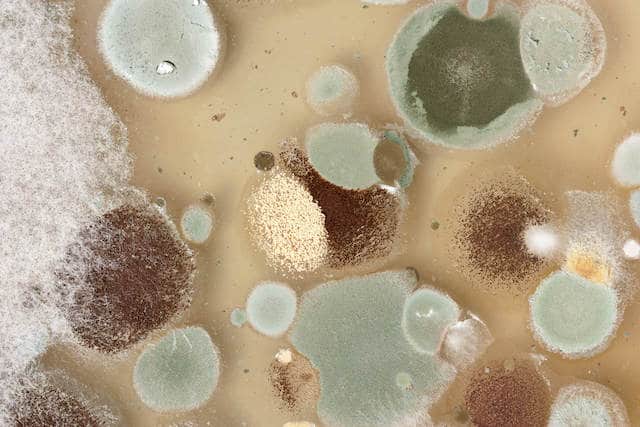
Leaks, condensation, flooding, and persistent dampness can support mold growth on suitable materials. Mold and dampness are separate concerns from asbestos, although they may occur in the same building.
A musty odor may indicate a moisture problem, but it cannot identify the precise source or establish the presence of asbestos.
Similarly, visible mold does not prove that asbestos is present. Each concern requires its own assessment.
Poorly managed airflow
Airflow can influence where particles accumulate and how they spread.
Blocked vents, dirty filters, inadequate exhaust, and inappropriate fan placement may contribute to poor air circulation or particle redistribution.
However, the solution is not simply to increase airflow in every situation. If hazardous dust has been released, moving air without suitable controls could spread the material.
The correct response depends on the source and the level of concern.
4. Where Dust and Fiber Accumulation May Be More Likely

Different parts of a building experience different patterns of dust accumulation. Furniture placement, surface design, cleaning frequency, and airflow all contribute to these patterns.
Understanding common collection points can help people manage ordinary household dust and recognize situations that require a more careful assessment.
Beneath beds, sofas, and large furniture
Spaces beneath large furniture often receive less attention during cleaning. Dust, textile fibers, hair, and other particles may accumulate because these areas are difficult to access.
The material may remain undisturbed for long periods and then become airborne when furniture is moved or the area is cleaned.
For ordinary household dust, periodic cleaning with suitable equipment can help control accumulation. If debris may have originated from damaged asbestos-containing materials, avoid moving the material or cleaning it yourself until you have received appropriate advice.
Behind appliances and cabinets
Refrigerators, washing machines, cabinets, and other large objects can create spaces where particles collect.
These areas may also contain lint released from nearby laundry equipment or dust carried by air movement.
A buildup behind an appliance is not evidence of asbestos. The source and surrounding materials matter more than the quantity or color of the dust.
Around ventilation openings and filters
Ventilation grilles and filters may collect particles because air passes through or near them.
A dirty filter may indicate that maintenance is needed, but its appearance cannot establish the composition of the captured particles.
Follow the equipment manufacturer’s maintenance instructions. If you suspect asbestos contamination in or around a ventilation system, obtain professional advice before disturbing the material.
In laundry areas
Laundry areas commonly contain textile lint, particularly around clothes dryers.
Dryer filters and exhaust systems require regular maintenance because accumulated lint can restrict airflow and contribute to overheating or fire risk.
This is a lint-management issue rather than proof of an asbestos hazard. If the surrounding building materials are old or suspect, assess those materials separately rather than assuming the lint itself contains asbestos.
In older buildings and maintenance areas
Potential asbestos concerns are more closely related to building materials and their condition than to ordinary dust collection points.
Certain older insulation products, ceiling finishes, flooring components, cement products, and specialized boards may warrant assessment, depending on their history.
A damaged material in a boiler room, service corridor, ceiling void, or maintenance area may deserve particular attention if it could be asbestos-containing and is likely to be disturbed.
Do not assume that every older material contains asbestos, and do not attempt to confirm it by scraping or breaking a piece.
Why location alone is not enough
A dusty corner does not necessarily represent a greater asbestos risk than a clean-looking surface elsewhere. Conversely, a surface that appears clean does not prove that the surrounding environment is free of microscopic fibers.
The most useful assessment considers the material, its condition, the activities taking place nearby, and the possibility of fiber release.
5. Household Lint and Fiber Accumulation: Sources, Prevention, and Cleaning

Household lint is a routine result of using textiles. Its accumulation depends on the materials in a home, the frequency of use, cleaning practices, and local airflow.
Understanding these factors helps distinguish everyday housekeeping from situations that require specialist attention.
Clothing, bedding, and towels
Clothing and bedding release fibers through friction, washing, drying, and regular handling.
Different fabrics shed different quantities and types of fibers. Worn textiles may behave differently from new ones, and laundering conditions can influence fiber release.
Small amounts of lint on clothing or near a laundry basket are generally unsurprising. More substantial buildup around a dryer may require cleaning and maintenance.
Carpets and rugs
Carpets collect particles from shoes, outdoor dust, textile fibers, and everyday activity. Walking can redistribute particles already present in the carpet.
Regular vacuuming suited to the carpet and equipment can help manage ordinary dust. High-traffic areas may need more frequent attention than rooms that are rarely used.
However, vacuuming should not be used as an improvised cleanup method for suspected asbestos contamination.
Upholstery and curtains
Sofas, cushions, curtains, and other fabric-covered items can release fibers and collect dust.
These surfaces may hold particles that are not obvious until the fabric is disturbed or cleaned.
Appropriate routine maintenance helps control ordinary accumulation. If visible debris appears to come from damaged building materials rather than the textile itself, investigate the source before treating it as normal lint.
Pet hair, pollen, and outdoor particles
Household dust often contains a combination of materials from several sources.
Pets may contribute hair and dander, while open windows and doors can allow pollen and outdoor particles to enter. Shoes can also carry soil and dust indoors.
Reducing unnecessary particle entry, cleaning regularly, and maintaining suitable ventilation can improve household conditions.
Practical methods for routine dust control
For ordinary household lint and dust:
- Clean hard surfaces with a suitable damp cloth when appropriate.
- Vacuum floors and carpets using equipment designed for the surface.
- Follow the manufacturer’s instructions for maintaining filters and appliances.
- Clean dryer lint filters as recommended.
- Maintain ventilation equipment and replace filters at the appropriate intervals.
- Reduce unnecessary clutter where it makes cleaning difficult.
- Address leaks and dampness promptly.
- Avoid creating unnecessary dust through dry sweeping or vigorous shaking of dusty fabrics.
These measures are general housekeeping guidance. They do not replace professional procedures for handling suspected asbestos contamination.
When routine cleaning is not appropriate
If you suspect that dust or debris came from asbestos-containing material, stop and avoid disturbing the area.
Do not dry sweep, blow the material with compressed air, or use an ordinary household vacuum. Do not collect samples or bag loose material without appropriate instructions.
Keep people away from the affected area and contact a qualified asbestos professional to determine the next steps.
6. What Asbestos Looks Like: Identification and Limitations

One of the most common questions about older buildings is whether a particular ceiling, wall, floor, roof, or insulation product contains asbestos.
The difficulty is that asbestos-containing materials can look very similar to products that do not contain asbestos.
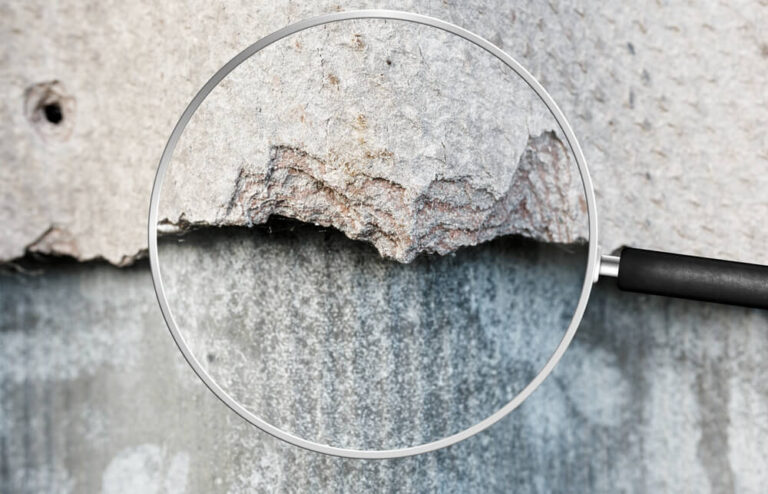
Visual appearance can help describe a material, but it cannot reliably confirm its composition.
Older insulation products
Some historical insulation products used asbestos because of its heat-resistant properties.
Depending on the product, insulation may appear as a fibrous wrapping, molded component, board, coating, or other material. However, insulation comes in many forms, and appearance alone cannot distinguish asbestos-containing products from other types.
If insulation around pipes, boilers, ducts, or equipment is damaged and its composition is uncertain, avoid touching or disturbing it.
Textured ceiling finishes
Certain textured ceiling products historically contained asbestos in some markets.
However, textured finishes can also be made from materials that do not contain asbestos. Texture, color, and age cannot provide a definitive answer.
If a ceiling may contain asbestos, avoid scraping, sanding, drilling, or removing the finish before the material has been appropriately assessed.
Floor tiles and backing materials
Some older vinyl floor tiles, sheet flooring, and associated backing or adhesive products may contain asbestos.
Not every vinyl tile, sheet floor, or adhesive contains asbestos. A product’s dimensions, color, pattern, or appearance are not reliable confirmation.
Renovation plans should account for the possibility of asbestos-containing flooring products where appropriate, particularly before cutting, grinding, sanding, or removing materials.
Roofing, siding, and cement products
Some historical roofing sheets, siding products, and cement-based materials were manufactured with asbestos fibers.
Other products made from cement or similar materials contain no asbestos. Their appearance may be similar.
If a building component is suspected of containing asbestos, avoid breaking, cutting, drilling, or sanding it until an appropriate assessment has been completed.
Why the naked eye cannot confirm asbestos
Asbestos fibers can be microscopic. A photograph, phone camera, or ordinary magnifying glass cannot reliably establish whether a material contains asbestos.
Visual assessment may help a professional identify which materials require further investigation, but confirmation generally relies on appropriate sampling and laboratory analysis when testing is warranted.
It is also important to distinguish identifying a material from measuring airborne exposure. A bulk sample may establish whether asbestos is present in a particular material, but it does not by itself establish the concentration of airborne fibers in a room.
Different questions require different assessment methods.
For general information, see the U.S. EPA’s asbestos identification guidance.
7. Can You Identify Asbestos Yourself?

You can observe the location and condition of a building material, but you cannot reliably confirm asbestos by sight, smell, or touch.
The safest approach is to gather information without disturbing the material and seek qualified assistance when necessary.
What you can observe without disturbing the material
If you have concerns about a building component, note its location and visible condition from a safe distance.
Useful observations may include:
- The type of building component involved.
- Whether the material appears intact or damaged.
- Whether there is visible crumbling or deterioration.
- Whether nearby maintenance or renovation work is planned.
- Whether building records or previous inspection reports describe the material.
Avoid touching loose debris or approaching damaged material unnecessarily. Do not scrape a surface to reveal what lies underneath.
These observations can help a qualified professional determine whether an inspection is appropriate. They cannot establish whether asbestos is present. Learn Asbestos-Containing Materials (ACMs)
Why DIY sampling can be dangerous
Sampling may disturb the material and release fibers. An incorrectly collected sample may also fail to represent the material accurately.
A sample from one part of a building component may not represent every layer, backing, coating, or adhesive associated with it.
For these reasons, sampling should be carried out by a suitably qualified professional using appropriate procedures. The sample should then be analyzed by a laboratory competent to perform the relevant asbestos analysis.
When should you seek professional assessment?
Professional advice is particularly appropriate when:
- Renovation will disturb older or suspect building materials.
- Insulation or other components appear damaged.
- A contractor discovers unexpected material during repair work.
- Dust or debris may have been released from a suspect product.
- Building records are incomplete and material identification is important before work begins.
The relevant qualifications and legal requirements vary by jurisdiction. Choose a professional with appropriate asbestos inspection, sampling, or remediation qualifications for the work required.
What if you have already disturbed a suspect material?
Stop the work and avoid further disturbance.
Keep other people away from the affected area. Do not sweep, blow, brush, or use an ordinary vacuum on the debris, and do not attempt to collect a sample.
Contact a qualified asbestos professional for advice about assessment and any necessary cleanup. If you believe exposure may have occurred, document the circumstances and seek appropriate professional guidance without assuming that illness will necessarily develop.
The U.S. EPA advises that intact materials in good condition are often best left undisturbed, while damaged or potentially disturbed materials may require professional assessment.
Source: EPA — Protect Your Family from Exposures to Asbestos.
8. Asbestos Exposure: Health Risks and Prevention

Asbestos-related health concerns primarily arise when fibers are released into the air and inhaled.
Because some asbestos-related diseases can take many years to develop, preventing exposure is an important consideration in building maintenance, renovation, and occupational safety.
How exposure can occur
Potential exposure can occur when asbestos-containing materials are cut, drilled, sanded, scraped, demolished, or damaged in ways that release fibers.
The likelihood and extent of exposure depend on the material, the activity, the condition of the product, the controls in place, and other circumstances.
Not every encounter with an older building material constitutes asbestos exposure. The material must be assessed appropriately before conclusions can be drawn.
Asbestos-related diseases
Asbestos exposure is associated with several serious diseases, including:
- Asbestosis: Scarring of lung tissue associated with asbestos exposure.
- Lung cancer: A malignant disease that has multiple causes, including asbestos exposure.
- Mesothelioma: A cancer affecting the lining of certain internal organs, commonly the lungs or abdomen.
- Other cancers: Asbestos is also associated with cancers of the larynx and ovary.
These conditions may have long latency periods, meaning that symptoms can appear long after exposure occurred.
A dusty surface cannot reveal whether asbestos is present, establish an exposure dose, or predict whether a person will develop disease.
Does every dusty environment contain asbestos?
No. Most ordinary household dust is not automatically asbestos-containing dust.
Dust may consist of textile fibers, soil, pollen, skin flakes, pet dander, and other everyday particles. Its appearance does not establish its exact composition.
Nevertheless, if dust may have originated from a suspect asbestos-containing material, it should not be assumed harmless simply because it resembles ordinary household dust.
How exposure can be prevented
Prevention starts with identifying potential hazards before carrying out work.
Building owners and managers should consider appropriate inspections, records, contractor procedures, and maintenance plans when older materials may contain asbestos.
Workers should not disturb suspect materials without the required assessment, controls, training, and legal authorization.
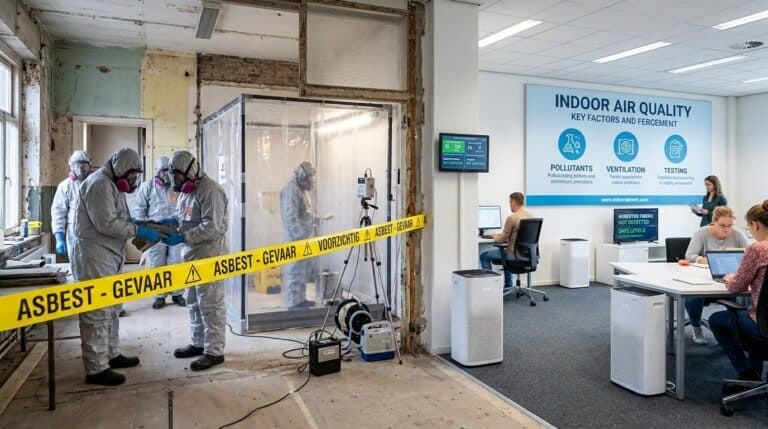
Where asbestos work is necessary, it may require specialist removal or management procedures, controlled access, appropriate protective equipment, and regulated waste handling.
Ordinary dust masks and household cleaning equipment should not be treated as a substitute for a suitable asbestos-control plan.
What should you do after a suspected exposure?
First, distinguish a suspected exposure from a confirmed one. Finding dust in a building does not establish that asbestos was present or that fibers were inhaled.
If an incident may have involved asbestos:
- Stop the activity and prevent further disturbance.
- Record what happened, including the material involved and the work being performed.
- Seek qualified advice about the building material and any necessary environmental assessment.
- If you have health concerns, discuss the circumstances with a healthcare professional.
- Follow professional guidance on any appropriate follow-up.
There is no need to assume that a single suspected incident will lead to disease. The priority is to understand what happened and prevent further exposure.
9. Indoor Air Quality: Managing Dust Without Creating New Problems

Indoor air quality describes the condition of the air inside buildings and how its contents may affect comfort and health.
Dust is one part of this picture. Other relevant factors include moisture, mold, combustion pollutants, cleaning products, outdoor pollution, and ventilation.
A good indoor air quality strategy begins by identifying pollution sources and selecting controls that suit the problem.
Control pollution at its source
Source control means reducing or eliminating a pollutant where it originates.
Examples include repairing a leaking pipe, stopping unnecessary smoke generation, maintaining appliances, and preventing avoidable dust during ordinary activities.
For renovation work, source control includes identifying potential hazardous building materials before disturbing them.
This is particularly important for asbestos because an air cleaner cannot replace safe management of an asbestos-containing product.
Improve ventilation appropriately
Ventilation can remove or dilute some indoor pollutants by exchanging indoor air with outdoor air.
Opening windows may be useful when outdoor air quality and weather conditions permit. Exhaust fans can help remove moisture and certain pollutants from bathrooms and kitchens.
However, ventilation should be considered in the context of the building and the pollutant source. If hazardous dust has been released, inappropriate fan use may spread it.
Maintain suitable filtration
Filters can remove some particles from the air passing through them. Their effectiveness depends on the filter specification, airflow, equipment design, maintenance, and particle characteristics.
Follow the manufacturer’s instructions for replacing filters and maintaining ventilation equipment.
A high-efficiency filter may help reduce certain airborne particles, but it cannot make every contaminated environment safe. Nor can it replace source identification and professional assessment when asbestos is suspected.
Manage moisture and mold
Moisture problems can contribute to mold growth and damage building materials.
Repair leaks, address condensation, and investigate persistent dampness. If mold growth is extensive or the source is unclear, appropriate professional assistance may be useful.
Remember that mold and asbestos are different concerns. One may exist without the other, and each requires an appropriate response.
Avoid creating additional dust
Routine cleaning should be designed to remove ordinary dust without unnecessarily redistributing it.
Damp wiping is useful on many suitable hard surfaces. Appropriate vacuuming can help manage ordinary household dust and lint.
If asbestos contamination is suspected, stop and obtain specialist advice instead of applying routine cleaning methods.
10. Mold Odors and Airborne Hazards: What Smell Can Tell You

Smell can provide clues about indoor environmental conditions, but it cannot reliably identify the composition of airborne particles.
A musty odor may indicate dampness or mold growth. It can also arise from other environmental conditions, so identifying the source requires more than relying on smell alone.
Why buildings develop musty odors
Persistent dampness can create conditions that support mold growth on suitable materials.
Common contributors include leaking pipes, roof leaks, condensation, water intrusion, and inadequate drying after a spill or flood.
A musty odor may be noticed before visible mold becomes obvious, particularly in enclosed spaces or behind furniture. However, the odor alone cannot confirm which material is affected or how extensive the problem is.
Can smell detect asbestos?
No reliable odor test can establish the presence of asbestos.
Asbestos-containing materials may be present without producing a recognizable smell. Conversely, an unpleasant odor does not indicate that asbestos is present.
This distinction matters because people sometimes interpret unusual smells as evidence of a particular pollutant when the actual source remains unknown.
What to do about persistent odors
If you notice a persistent musty smell:
- Look for moisture sources and signs of water damage.
- Check for leaks or condensation where this can be done safely.
- Address the moisture problem and dry affected areas appropriately.
- Seek help if the source cannot be found or mold growth is extensive.
- Avoid disturbing suspect older building materials during the investigation.
If damaged asbestos-containing materials may also be involved, consult a qualified professional before touching or removing them.
11. Lint Fire Prevention and Everyday Building Safety

Lint accumulation presents a separate safety issue in laundry areas.
Dryer lint consists largely of combustible fibers. When lint accumulates in a filter, dryer, or exhaust duct, it may restrict airflow and contribute to overheating or fire.
Understanding this hazard helps readers distinguish between ordinary lint management and asbestos-related precautions.
Why dryer lint requires attention
Dryers generate heat while moving air through clothing and the exhaust system.
A blocked filter or restricted duct can interfere with airflow. Lint accumulation near heat sources may also increase fire risk.
These issues can develop even in a building with no asbestos-containing materials. They are therefore important to manage independently of asbestos awareness.
Practical dryer maintenance
Follow the appliance manufacturer’s maintenance guidance.
- Clean the lint filter as directed.
- Check that the dryer exhaust system is maintained and unobstructed.
- Keep the surrounding area free of accumulated lint.
- Arrange inspection if the dryer shows signs of overheating or airflow problems.
- Do not ignore warning signs or continue using equipment that appears unsafe.
Exhaust ducts should be inspected and cleaned as appropriate for the appliance and installation. If the duct is damaged, improperly installed, or obstructed, professional maintenance may be necessary.
What if the surrounding material is suspect?
A dryer-lint problem does not automatically indicate asbestos contamination. However, older building materials near the appliance may warrant separate assessment if they are damaged or likely to be disturbed during maintenance.
Do not confuse the routine removal of lint from an appliance filter with cleaning debris from suspected asbestos-containing materials.
The former is ordinary appliance maintenance; the latter may require specialist controls.
12. Why the Asbestlint Concept Matters

The value of the AsbestLint topic lies in helping readers understand the relationship between ordinary dust, airborne particles, building materials, and potential environmental hazards.
These subjects are related, but they should not be treated as identical.
Helping homeowners make informed decisions
Homeowners often encounter uncertain situations: an old ceiling needs repair, insulation appears damaged, or dust has accumulated after maintenance work.
Clear information helps them recognize the limits of visual inspection, avoid unnecessary disturbance, and seek professional advice when needed.
For ordinary household dust, practical cleaning and maintenance may be enough. For a potentially hazardous building material, the appropriate first step may be professional assessment rather than cleaning.
Supporting safer renovation planning
Renovation can disturb materials that have remained untouched for years.
A responsible project considers potential hazards before demolition or intrusive repairs begin. This may include reviewing building records, arranging appropriate inspections, and ensuring that contractors understand the relevant safety requirements.
The aim is to prevent avoidable exposure rather than respond only after dust has been released.
Improving maintenance decisions
Building managers and maintenance teams benefit from understanding the condition and composition of building materials.
A planned inspection and maintenance program can help identify deterioration, reduce unnecessary disturbance, and clarify when specialist assistance is needed.
This is particularly important in buildings where asbestos-containing materials may be present.
Encouraging evidence-based awareness
People may become concerned when they see unusual dust, discover an old building product, or encounter information about asbestos-related diseases.
Credible guidance should neither dismiss legitimate concerns nor imply that every dusty surface is dangerous.
The correct approach is to identify the source, consider the material and its condition, and use appropriate assessment methods.
Connecting related topics without confusing them
AsbestLint brings several educational subjects together: lint accumulation, dust movement, indoor air quality, asbestos identification, and household safety.
The connections are useful when explained carefully. For example, lint and asbestos fibers are both fibrous particles, but they differ in composition, origin, and potential health implications.
Similarly, mold and asbestos may both raise indoor environmental concerns, but neither can be identified reliably through smell alone.
Conclusion: Focus on the Source, Not Just the Dust
Understanding Asbestlint means looking beyond the appearance of dust and asking more useful questions about its origin, composition, movement, and potential risks.
Ordinary household lint commonly comes from textiles and everyday activities. Indoor dust may contain a mixture of biological and non-biological particles. Asbestos fibers, by contrast, can be released from certain asbestos-containing materials when they are damaged or disturbed.
These differences matter because the correct response depends on the source.
Routine household lint can generally be managed through appropriate cleaning and appliance maintenance. Indoor air quality can benefit from source control, suitable ventilation, and properly maintained filtration. Suspected asbestos-containing materials require a more cautious approach, including avoiding disturbance and obtaining qualified professional advice when necessary.
Visual inspection, smell, and ordinary household equipment cannot reliably establish whether asbestos is present. When identification matters, professional assessment and appropriate laboratory testing provide a more dependable basis for decision-making.
Ultimately, the safest approach is straightforward: identify potential sources, avoid unnecessary disturbance, and rely on credible evidence rather than assumptions. By understanding how dust behaves and how asbestos-related hazards differ from everyday lint, homeowners, building managers, and maintenance workers can make better-informed decisions about indoor environments.
13. Frequently Asked Questions About Asbestlint, Dust, and Fibers
What is Asbestlint?
Asbestlint is the central educational term used in this guide to discuss household lint, dust dynamics, airborne fibers, and asbestos awareness. It is not an established scientific name for a particular mineral, fiber, or disease.
Does ordinary household lint contain asbestos?
Not necessarily. Household lint commonly originates from textiles and everyday materials. Its presence does not establish asbestos contamination.
If dust may have originated from a suspect asbestos-containing building material, avoid disturbing it and seek appropriate professional advice.
Can asbestos fibers be seen with the naked eye?
No reliable visual identification is possible. Some fibers of concern are microscopic, and a material’s appearance cannot confirm whether it contains asbestos.
Professional assessment and laboratory analysis may be necessary when testing is warranted.
Does asbestos have a smell?
Smell is not a reliable way to detect asbestos. A material may contain asbestos without producing a noticeable odor, and an unusual odor does not prove that asbestos is present.
Can household dust affect indoor air quality?
Yes. Indoor dust may contain different types of particles, and airborne particulate matter can contribute to indoor air quality concerns.
The appropriate response depends on the source, the composition of the particles, and the circumstances.
Should I use a household vacuum on suspected asbestos dust?
No. Do not use an ordinary household vacuum on suspected asbestos contamination. Avoid disturbing the material and contact a qualified asbestos professional for advice.
Should I remove asbestos-containing material from my home?
Not automatically. Intact material in good condition that will not be disturbed may be safer left in place and appropriately managed.
Damaged material or material affected by planned renovation may require professional assessment and, where appropriate, specialist removal.
Are all old ceiling tiles and floor tiles made with asbestos?
No. Some historical products contained asbestos, while others did not. Age and appearance alone cannot confirm the presence of asbestos.
How can I identify a suspected asbestos material safely?
Avoid disturbing it. Record its location and visible condition from a safe distance, review available building records, and contact a qualified asbestos professional if identification is necessary.
Can an air purifier remove all asbestos fibers?
An air cleaner should not be relied upon to make an environment with suspected asbestos contamination safe. Appropriate source control, professional assessment, and any necessary specialist cleanup are the priorities.
How can I reduce ordinary household dust?
Clean regularly, damp-wipe suitable surfaces, maintain vacuum and ventilation filters, and address sources of dust and moisture.
These measures are for routine household dust management and do not replace specialist asbestos cleanup procedures.
Is mold-related dust the same as asbestos dust?
No. Mold-related particles and asbestos fibers have different origins and require different assessment approaches. A musty odor cannot establish the presence of asbestos, and visible mold does not prove asbestos contamination.
What should I do if a contractor disturbs a suspected asbestos material?
Stop the work, avoid further disturbance, keep people away from the affected area, and seek advice from a qualified asbestos professional. Do not dry sweep or use an ordinary vacuum on the debris.
Does visible dust mean that someone has been exposed to asbestos?
No. Visible dust does not establish its composition or prove asbestos exposure. The material’s source and the circumstances of the incident must be assessed appropriately.