What Asbestos Looks Like & How to Identify It Safely

How to identify potential asbestos visually, test it safely, and understand the risks for professionals in renovation and inspection
When working in renovation, inspection, or building maintenance, professionals often come across aged materials that raise the question: Could that be asbestos? Asbestos is notorious for hiding in plain sight—inside popcorn ceilings, behind gypsum wallboard, woven into joint compounds, or embedded in insulation boards. Without hands-on training, many materials can appear “fluffy,” rock‑like, brown, or gray — none of which conclusively prove the presence of asbestos fibers. But given the serious risks of inhaling asbestos and long latency periods for diseases such as mesothelioma, asbestosis, or lung cancer, professional diligence is essential.
In this article, we’ll explore what asbestos can look like, why visual identification is unreliable, when to test, and how to manage safety and compliance. This is tailored for a professional audience building inspectors, renovation contractors, architects, abatement specialists, and safety consultants—who need both insight and practical guidance grounded in credible data.
Why Visual Identification Is So Challenging
Asbestos is not a uniform material with a distinctive color or shape. Rather, it’s a mineral fiber mixture, often blended with other materials (e.g., binders, fillers, additives, cement, fireproofing). Over decades, these materials age, may be painted, sealed, or damaged, further obscuring their original appearance.
Here are key reasons visual detection is unreliable:
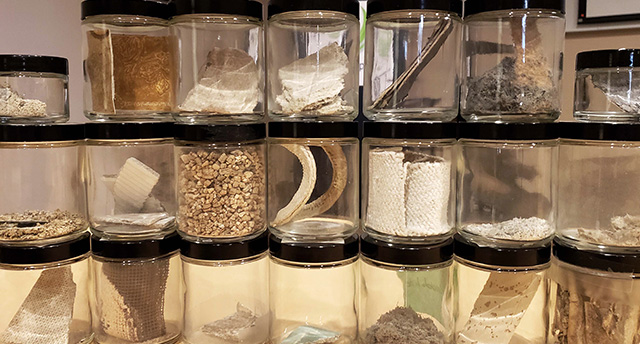
- Color variability: Asbestos-containing materials (ACMs) may appear white, gray, blue-gray, brown, or even off-white depending on binders and coverings.
- Texture masking: Paint, sealants, or drywall finishes often overcoat the original surface, hiding telltale fibrous or rough textures.
- Low asbestos content: Some older materials might contain just 1–5 % asbestos by mass plus inert filler so the visual component is subtle.
- Non‑asbestos lookalikes: Many materials mimic asbestos appearance like perlite board, vermiculite, gypsum plaster, acoustical “fluffy” textures, or popcorn ceiling treatments.
- Undisturbed state: When asbestos materials are left intact (undisturbed), they can appear dense and rock‑like rather than crumbly or fluffy.
Because of that, relying solely on “looks like asbestos” is risky. Professionals must always confirm through testing and analysis.
Common Forms and Appearances of Asbestos
Below are the typical applications and appearances of asbestos in buildings, especially those built between the 1920s and the late 1980s.
Popcorn Ceilings / Acoustical Textures
One of the most recognizable forms is the “popcorn ceiling”, often applied in the 1950s–1980s to ceilings and sometimes walls for soundproofing or decorative finish. The texture is rough and “fluffy,” sometimes described as cottage‑cheese-like. The mixture might include asbestos fibers, vermiculite, or perlite as the filler.
Because the texture is fairly loose, popcorn ceilings tend to be friable (easily crumbled) and pose a higher risk if disturbed. If chipped, scratched, cut, or sanded, microscopic fibers can become airborne.
Insulation, Cement Sheets, and Fireproofing
Asbestos was heavily used in thermal insulation boards, as fireproofing, and in cement sheets or asbestos‑cement boards. For example:
- Cement sheets / corrugated asbestos cement may appear gray or off‑white, with a stiff, rock‑like structure.
- Insulation boards behind boilers or in fire-rated walls may look like rigid board material (often around ½ inch to 5⁄8 inch thick), sometimes painted or covered in plaster.
- Flintkote, Keene, Synko (Synkoloid, Synkoloid), Gold Bond, and National Gypsum were among manufacturers whose products sometimes contained asbestos additives or binders.
Floor Tiles, Sheetrock, Joint Compounds, and Additives
Asbestos also appeared in:
- Vinyl floor tiles (e.g. 9×9, 12×12 inches, or 4×4 tiles) with backing containing asbestos.
- Sheetrock joint compound (“mud”) mixed with asbestos fibers to enhance fire and crack resistance.
- Patching compound, cementitious fillers, and wallboard adhesives occasionally used small percentages of asbestos.
- Gypsum wallboard additives sometimes had asbestos fibers in fire-rated or acoustic boards.
These materials are often at first glance indistinguishable from non‑asbestos counterparts.
Other Less‑Obvious Forms: Tape, Plaster, Boards
Other tricky forms include:
- Drywall joint tape and finishing plaster may hold asbestos fibers.
- Horsehair plaster (pre‑1950s) used animal hair plus fibrous material for strength—but sometimes asbestos was added for durability.
- Acoustical boards, fiberboard, ceiling panels, or fire‑rated boards behind load-bearing studs.
- Thermic insulation, expansion joints, and gaskets may also hide asbestos fibers in their felt or blanket structure.
Some boards may be labeled “fireproof” or “thermic,” but only lab analysis can confirm asbestos content.
Visual “Signs” That Suggest Asbestos
While you should never rely purely on appearance, the following can raise suspicion:
- A fluffy or powdery texture if you scratch or chip a surface
- Popcorn texture ceilings with visible granules or aggregate
- Edges or broken corners where inner fibers or foliation show
- Certain board thicknesses (e.g. ½ in, 5⁄8 in, or even 1 in) in older structures
- Patchwork, cracks, or crumbling near joints and tile edges
- Mixed brown, gray, or blue-gray tones in older walls or ceilings
- Inconsistent surfaces (areas of damage, paint peeling, crumbled sections)
- Presence of asbestos-associated brand names on boards, plaster, or insulation
- If the structure dates from 1935–1975, or renovations in 1970s–1980s
But again: those are indicators, not confirmations.
Why “Looks Like” Is Not Enough: Testing & Analysis
Because misidentification could lead to serious health consequences and liability, professional standards require testing and analysis.
Testing Kits, Sample Collection & Lab Analysis
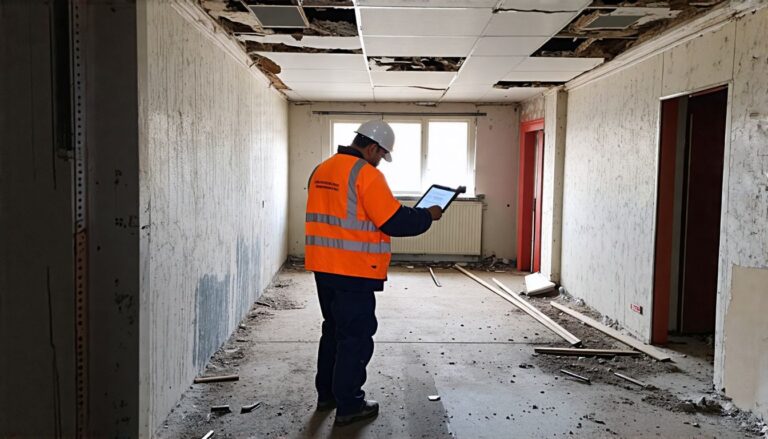
Professionals often use asbestos testing kits, but amateur kits are limited in reliability. A certified inspection professional or licensed abatement contractor should perform sample collection:
- Seal off area, minimize disturbance
- Wear PPE (e.g. respirator, Tyvek suit)
- Use appropriate tools (score the surface, use a wet method)
- Place samples in sealed, labeled containers
- Send to a UKAS‑accredited or certified laboratory
- The lab will conduct PLM (polarized light microscopy) or TEM to quantify asbestos content
A proper analysis might reveal percentages like “2.7 % chrysotile” or “no asbestos detected.” Many labs highlight that materials below 1 % may still be regulated if friable or disturbed.
The Role of Qualified Inspectors & Licensed Professionals
Only trained experts (often with OSHA course, NEBOSH, IOSH, or certified asbestos training) should carry out investigations or removal. Inspections follow recognized protocols for compliance and liability protection.
Air Monitoring, Cross‑Contamination, and Undisturbed vs Disturbed Materials
Once asbestos materials are disturbed, airborne fibers can travel. Cross‑contamination (e.g. on shoes, clothing, dust) is a real danger. Before, during, and after removal, air monitoring is required to measure fiber count. Also:
- Leave undisturbed asbestos intact if in good condition
- Avoid cutting, sanding, or drilling unless part of a safe removal plan
- Professionals follow negative pressure enclosure, HEPA filtration, and waste control
Health Risks from Mistaking or Disturbing Asbestos
When asbestos is disturbed or crushed, microscopic fibers can become airborne. If inhaled, they lodge in the lungs and may trigger chronic injury.
- Inhaling asbestos fibers leads to scarring, inflammation, and potential carcinogenesis.
- Diseases include asbestosis (lung scarring), pleural disease, lung cancer, and mesothelioma.
- The latency period between exposure and symptoms is often 20–40 years. (ATSDR)
- Globally, more than 200,000 deaths annually are attributed to occupational asbestos exposure.
- Some studies suggest every 20 tons of asbestos produced correlates with one death somewhere in the world. (Collaborative for Health & Environment)
Secondhand exposure is also a risk—fiber-contaminated garments or clothing worn home by workers can expose family members.
Even if asbestos content is low (1–5 %), a friable state (crumbled or easily broken) leads to high risk. That’s why professionals err on the side of caution.
Safe Removal, Abatement & Regulatory Compliance
When removal is necessary (e.g. demolition, renovation), strict safety protocols and regulatory compliance are required.
Abatement Best Practices
- Use licensed abatement companies with certified training
- Isolate area with negative pressure, sealed barriers, and HEPA filtration
- Clean surfaces via wet methods or HEPA vacuuming
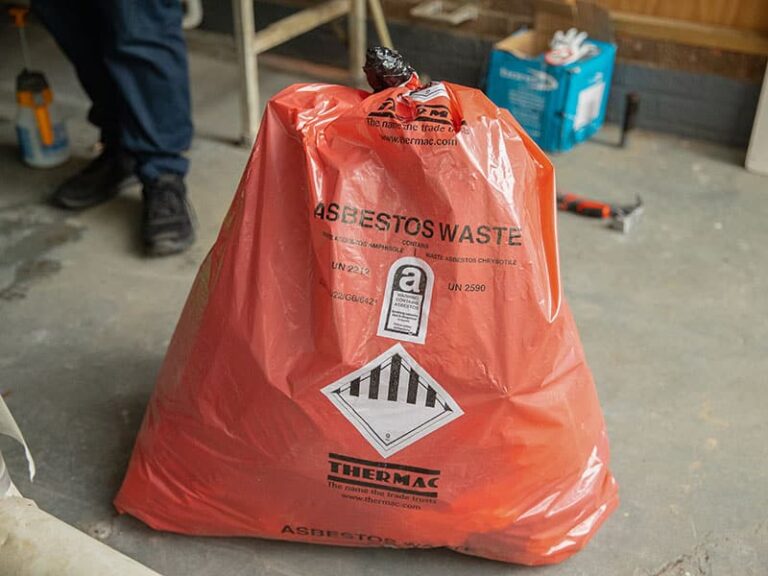
- Bag waste in labeled, sealed containers
- Perform post‑removal air clearance testing before occupancy
- Maintain chain-of-custody records and waste manifest
Regulatory Framework & Compliance
- In the U.S., Asbestos NESHAP (40 CFR Part 61, Subpart M) governs asbestos removal during renovations/demolition.
- The EPA bans new use of asbestos and enforces rules for building materials.
- In schools, AHERA (Asbestos Hazard Emergency Response Act, 1986) mandates inspections, plans, and corrective actions.
- OSHA sets exposure limits and safety training requirements for workers.
When Removal Is Not Required
In many cases, it is safer to leave undisturbed asbestos (in good condition) and encapsulate it rather than risking disturbance. Maintenance and periodic inspections may suffice.
Case Examples & Historical Use in Construction
- In England between 2017 and 2023, 147 deaths of health or education staff were linked to asbestos exposure in schools and hospitals.
- The EPA is finalizing a ban on chrysotile (white) asbestos, the last widely used form in the U.S.
- Many buildings constructed before 1975–1980 likely contain asbestos in ceiling texture, insulation, fireproofing, or floor tiles. In the U.S., “spray-on” asbestos was banned in 1973.
- Some commercial structures from the 1920s to 1950s used horsehair plaster and asbestos reinforcement—materials still found in heritage buildings.
- Manufacturers such as Georgia Pacific, Keene, CertainTeed, National Gypsum, Kaiser Gypsum, Gold Bond, and Flintkote historically produced asbestos-containing boards, ceiling tiles, or fireproofing materials.
These examples show how pervasive asbestos was—and how it can still lurk in modern renovations.
Conclusion
Understanding what asbestos “looks like” is an important skill for professionals but it is only the first step. Because asbestos materials are often masked, painted over, or mixed with other minerals, visual identification is not enough. You must proceed with care, perform proper sampling and analysis, and rely on licensed inspectors and trained removal professionals. The health stakes are high—inhaling microscopic asbestos fibers can result in mesothelioma, asbestosis, or lung cancer decades later.
If you’re inspecting or renovating an older structure and suspect “that fluffy ceiling, brown board, or rock‑like insulation might be asbestos,” don’t gamble. Engage qualified experts for testing, monitor air quality, and follow regulatory abatement protocols. Doing so protects your clients, your team, and your reputation.