
Foldable solar panels are becoming a preferred power option for people who need energy away from fixed outlets. Their appeal comes from a simple advantage: they combine solar charging with easy transport and storage. Campers, RV travelers, van owners, remote workers, and homeowners preparing for outages all want power that is flexible, quiet, and easy to use. Unlike rigid rooftop systems, foldable panels can move where sunlight is best and pack away when not needed. They also support a broader shift toward practical clean energy products that fit everyday routines. As performance improves and designs become lighter and tougher, foldable solar panels are moving from niche gear into mainstream use for travel, backup power, and off-grid convenience.

What Makes Foldable Solar Panels Different?
How foldable designs improve portability
The biggest difference is physical design. Foldable solar panels use hinged sections that close like a case, reducing bulk and making transport much easier than carrying a rigid panel of the same wattage. This compact form helps users fit a panel into a car trunk, RV storage bay, boat compartment, or closet shelf. Lower weight also improves real-world usability, especially for solo setup. For example, the anker solar panel PS100 weighs just 7 lb including the stand and is 10% lighter than the previous version, making quick deployment simpler. Because foldable panels are easy to reposition, users can track sunlight more effectively and get better charging performance without a permanent installation.
Key features that enhance everyday use
Beyond portability, foldable solar panels are built for convenient daily handling. Integrated kickstands help users angle the panel toward the sun without carrying separate mounts. Weather protection is another major advantage, since outdoor charging often involves dust, wet ground, or sudden rain. Durable frames and impact-resistant materials improve long-term reliability for travel and repeated setup. The Anker SOLIX PS100 Bifacial Portable Solar Panel, for instance, pairs a reinforced aluminium frame with IP68 water and dust resistance, plus a 10-year lifespan and 5-year warranty. Useful connectivity also matters. Included solar charging cables and portable power station compatibility make setup faster, while bifacial designs can capture reflected light from surfaces such as sand, snow, or concrete for added output.
Why More People Are Choosing Foldable Solar Panels
Growing demand for outdoor and emergency power
Outdoor recreation has expanded the market for portable energy, and foldable solar panels meet that need well. Campers, RV users, anglers, and remote workers often need to recharge devices for several days without hookups. A foldable panel lets them generate power silently at the site instead of relying entirely on stored battery capacity. Emergency preparedness is another major reason for growing demand. During outages, people want to keep communication devices, lights, radios, and small appliances powered without fuel storage or engine noise. Because foldable panels store easily and deploy quickly, they fit naturally into home backup plans. Their portability also helps during evacuations, temporary setups, and unpredictable conditions where fixed systems are not an option.
Advances in efficiency, durability, and convenience
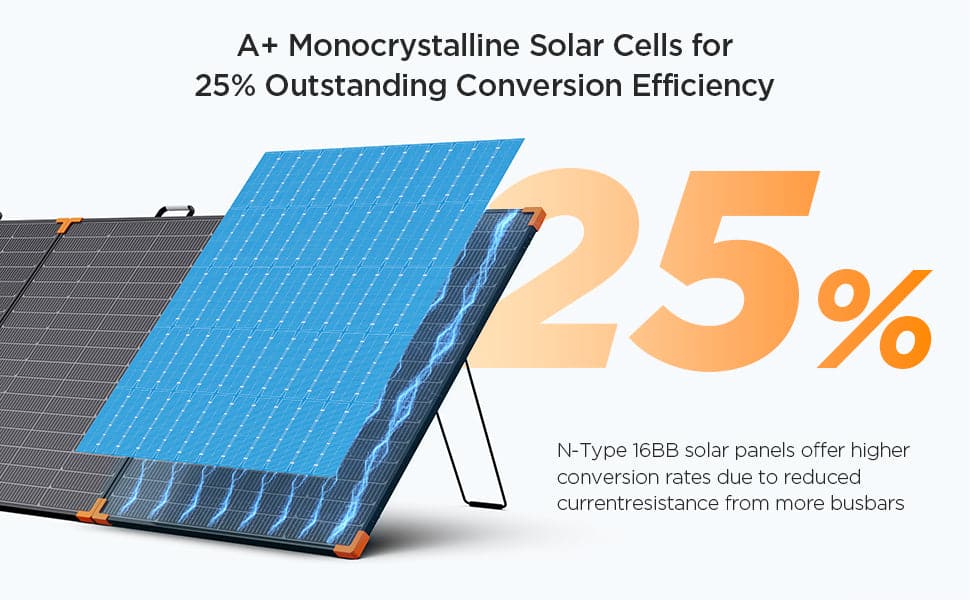
Improved performance has made foldable solar panels more practical for regular use. Newer solar cells convert more sunlight into charging power, reducing the space needed for useful output. The Anker SOLIX PS100 Bifacial Portable Solar Panel uses advanced N-type cells with 25%+ conversion efficiency and supports up to 10% more power through dual-sided collection. That means better charging in reflective environments and stronger performance in high temperatures. Durability has advanced as well, with sturdier frames, stronger outer materials, and better sealing against dust and water. Convenience has improved through lighter builds, simpler stands, and ready-to-use cable options, including dual 8.2 ft charging cables and an XT60i cable in the box. These upgrades make portable solar easier to trust and easier to use.
How to Choose the Right Foldable Solar Panel
Match panel size and output to your power needs
Start by listing what you plan to charge and how often. Small electronics such as phones, cameras, lanterns, and battery packs require far less energy than portable fridges, laptops, or larger power stations. If your goal is to maintain basic devices during day trips or short outages, a compact foldable panel may be enough. If you want to refill a power station over several hours of sun, you need a panel with higher output and efficient energy conversion. It also helps to think about available sunlight and charging time rather than wattage alone. A well-sized panel should provide enough daily energy without becoming too large or heavy to carry comfortably. Balance output with storage space and portability.
Compare durability, compatibility, and charging options
A foldable solar panel should be easy to use repeatedly in real outdoor conditions. Look for weather protection, strong frame materials, durable hinges, and impact resistance if the panel will travel often. Check the IP rating for water and dust protection, especially for camping, boating, or emergency storage. Compatibility is just as important. Make sure the panel’s connectors work with your portable power station or charging setup without requiring extra adapters. Included cables can save time and reduce setup errors. Built-in stands also improve charging efficiency by helping you find a better sun angle quickly. A strong mix of rugged construction, straightforward connections, and practical setup features usually matters more in daily use than marketing claims alone.

Conclusion
Foldable solar panels are growing in popularity because they make solar power more practical for everyday life. They are portable, easy to store, simple to deploy, and increasingly capable of supporting travel, recreation, and emergency backup needs. Improvements in efficiency, durability, and user-friendly design have turned them into realistic tools rather than occasional specialty gear. For many buyers, the appeal is clear: clean power without fuel, noise, or fixed installation. Choosing the right panel comes down to matching output, weight, durability, and connector options to the way you actually plan to use it. When those factors align, a foldable solar panel becomes a convenient energy source that fits naturally into both planned adventures and unexpected power needs.