AC Output Explained: Choosing the Right Power Station
AC output is one of the most important specs to check when choosing a portable power station. It tells you how much household-style power the unit can deliver to appliances, tools, and electronics through its AC outlets. If the output is too low, devices may not run at all or may shut the station down. If it matches your needs, you get reliable power for home backup, camping, RV travel, and everyday convenience. Understanding AC output helps you compare models more accurately, estimate what you can run at the same time, and avoid buying a power station that is either underpowered or unnecessarily oversized.

What Is AC Output in a Portable Power Station?
How AC Output Converts Stored Battery Energy
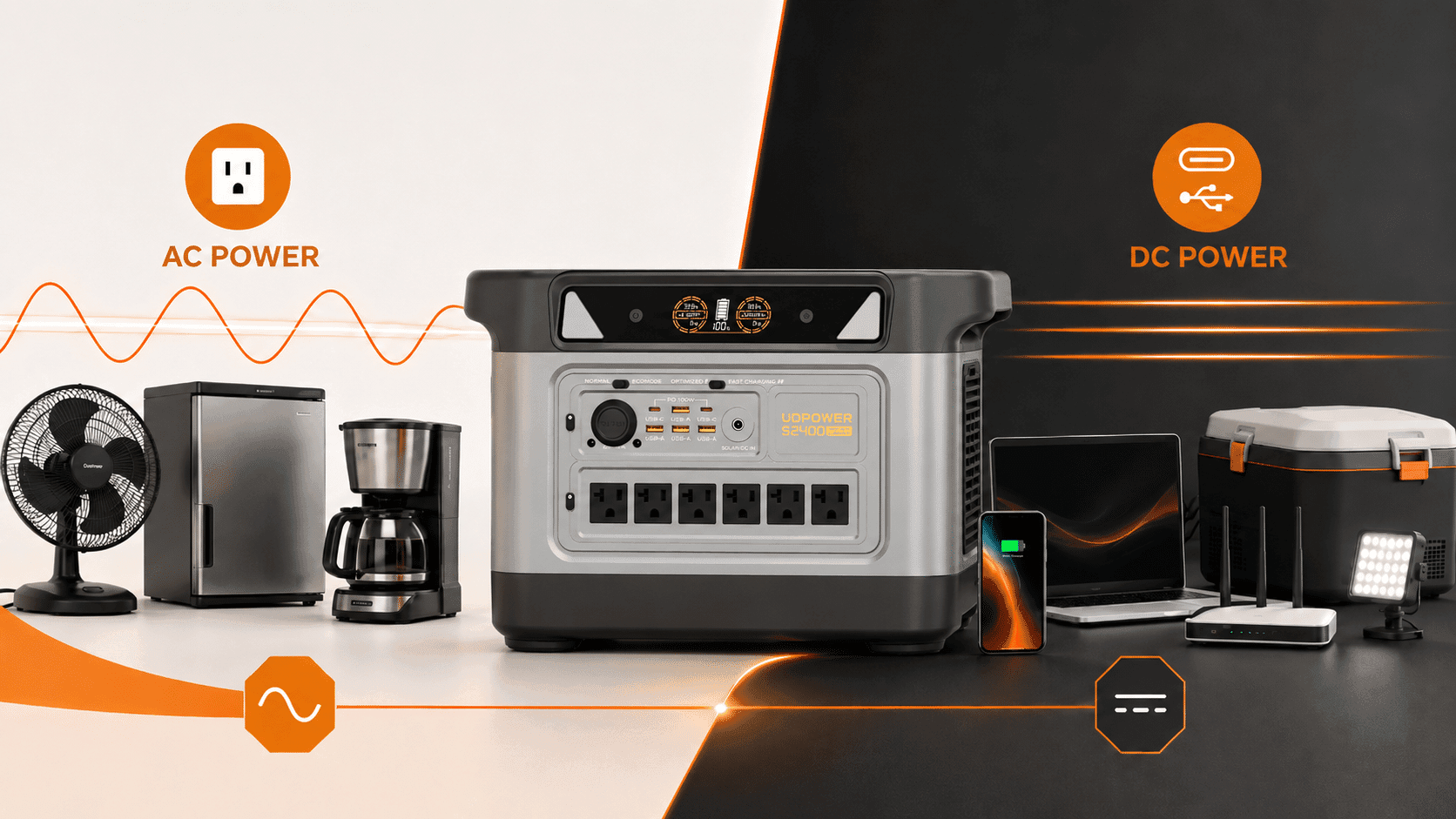
A portable power station stores energy in its battery as direct current, or DC. Most household devices, however, use alternating current, or AC, so the unit relies on an internal inverter to convert battery power into usable wall-outlet-style electricity. AC output refers to the amount of power that the inverter can continuously supply through the AC ports. This rating matters because it determines whether the station can handle a light load, such as charging a laptop, or support larger devices like a microwave or small heater. Better inverter capacity means broader appliance compatibility and steadier performance.
Understanding Watts, Voltage, and Device Compatibility
Watts measure how much power a device uses, while voltage describes the electrical pressure supplied to run it. For portable power stations, the key number is usually the AC output watt rating, because that defines the maximum total load the station can support at once. To choose correctly, add up the running wattage of the devices you plan to use together and confirm their voltage matches the station’s AC outlets. Also check starting watts for appliances with motors or compressors. A unit can only power devices safely when watt demand stays within its rated AC output range.
How to Choose the Right AC Output Level for Your Needs?
Low-Power Devices for Everyday Electronics
For phones, tablets, cameras, laptops, Wi-Fi gear, lights, and small monitors, a lower AC output level is often enough. These devices usually draw modest wattage, so you do not need a large inverter just for casual daily use. A compact power station can easily cover charging tasks, desk electronics, and short outages involving communication essentials. When evaluating capacity, think about how many devices you want to run at the same time rather than one by one. If your routine centers on personal electronics and portable convenience, low AC output keeps the unit lighter, simpler, and more affordable.
Medium-Power Appliances for Home Backup
Home backup usually calls for a mid-range AC output because common essentials draw more power than personal electronics. Refrigerators, televisions, CPAP machines, routers, fans, and kitchen appliances can run comfortably only when the power station provides enough continuous wattage and stable inverter performance. A practical approach is to list the items you want during an outage and total their running watts, then leave headroom for startup surges. For many households, medium AC output offers the best balance between capability and portability. It supports essential appliances without forcing you into an oversized system for basic emergency coverage.

High-Power Equipment for RV and Outdoor Applications
RV use, outdoor events, and worksite power often require higher AC output because loads can rise quickly. Coffee makers, induction cooktops, portable air conditioners, electric grills, power tools, and other demanding equipment need stronger continuous output and enough surge support to start properly. In these settings, powering several devices at once is common, so total wattage matters as much as individual appliance ratings. Choosing a higher-output station gives you more flexibility, especially when comfort and convenience are priorities away from home. It also reduces the need to constantly unplug devices to stay within the station’s power limits.
Anker SOLIX C2000 Gen 2: AC Output Performance Example
2,400W Rated Output for Multiple Devices
The Anker SOLIX C2000 Gen 2 is a useful example of what strong AC output looks like in practice. Its 2,400W rated AC output allows it to power multiple devices at the same time, making it suitable for home backup, RV setups, and outdoor use where several loads may run together. That level supports many household essentials and higher-demand appliances without requiring users to ration every outlet. For buyers comparing power stations, a rating like 2,400W signals a versatile inverter platform that can move beyond simple charging tasks and handle more realistic real-world power needs.
Up to 4,000W Peak Power for Higher Startup Loads
Some appliances need extra power for a brief moment at startup, even if their normal running wattage is much lower. The Anker SOLIX C2000 Gen 2 addresses this with up to 4,000W peak power, which helps it handle temporary surge demands from devices such as refrigerators, pumps, or tools with motors. That peak capability improves compatibility with equipment that might otherwise trip a lower-powered station during startup. For shoppers, this spec is important because rated output tells you what can run continuously, while peak power shows how well the station can absorb short bursts needed to get tougher appliances started.
Conclusion
Choosing the right AC output starts with one simple question: what do you want to power, and how much wattage will those devices need at the same time? Low-output stations fit everyday electronics, medium-output models serve essential home backup, and higher-output units support RV, outdoor, and heavier appliance use with greater flexibility. Always compare continuous output, startup surge capability, and device watt requirements before buying. When you understand AC output clearly, you can select a portable power station that runs your equipment safely, avoids overloads, and delivers dependable performance instead of guessing based on battery size alone.