Personal Safety Devices: Research-Backed Protection for Everyday Life
Personal safety is not a trend. It is a response to how modern life actually works. People commute at odd hours, live alone more often, travel independently, and rely heavily on public spaces. In these situations, personal safety devices act as practical tools, not fear-driven accessories.
This article explains personal safety devices using verified research, real-world data, and trusted institutional findings. It avoids exaggerated claims and focuses on what these tools can realistically do, where they help most, and how to use them responsibly.
Understanding Personal Safety Devices
Personal safety devices are tools designed to help individuals reduce risk, alert others, or request assistance during emergencies. These devices focus on early response rather than confrontation.
They generally serve three purposes:
- Drawing immediate attention
- Creating time to escape
- Improving emergency response speed
They do not replace awareness, judgment, or safe behavior. They support them.
Organizations such as the National Safety Council and the American Red Cross emphasize layered safety approaches. Personal safety devices fit directly into that model.
Why Personal Safety Devices Matter Today
Research shows that many harmful incidents escalate because help arrives too late.
Data from criminal justice and public safety institutions consistently highlights two key realities:
- Most personal safety incidents happen quickly
- Immediate response often determines outcomes
Emergency response times vary widely depending on location. In many urban areas, response can take several minutes. In rural or crowded environments, it may take longer. During those minutes, individuals rely only on what they can do themselves.
Personal safety devices shorten the gap between danger and assistance.
Evidence From Crime and Safety Research
Criminal behavior research shows that many incidents are opportunistic rather than planned. Situations change quickly when attention shifts toward the attacker or when bystanders become aware.
Studies referenced by criminal justice research organizations indicate:
- Many assaults occur without weapons
- Disruption and attention can reduce continuation
- Victims who create noise or resistance often gain time
This does not mean devices prevent all harm. It means they can interrupt escalation, which matters.
Preparedness does not assume danger everywhere. It accepts unpredictability.
Main Categories of Personal Safety Devices
Different devices serve different roles. Understanding these roles helps users choose wisely.
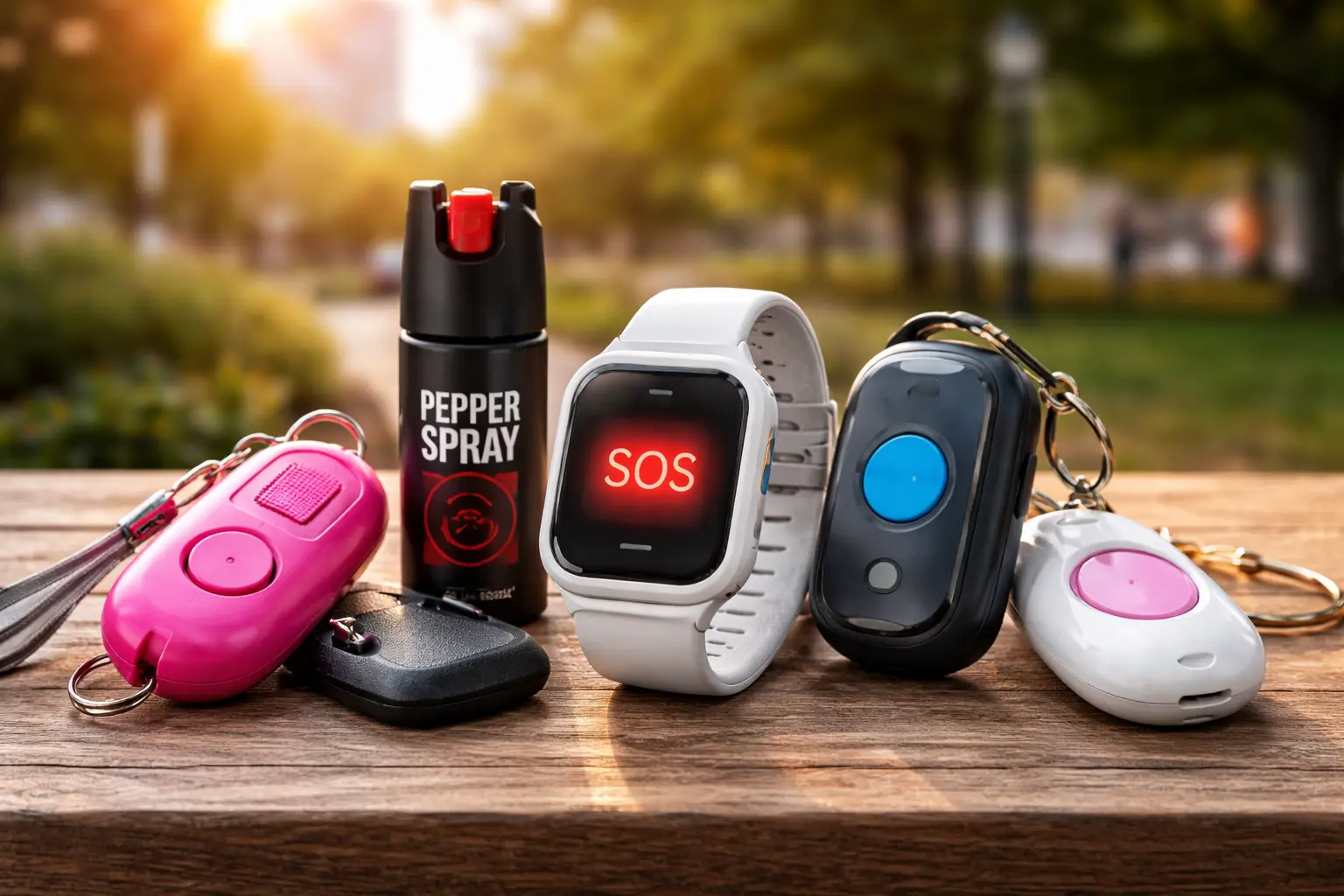
Personal Safety Alarms
Personal safety alarms produce a loud sound when activated. Many models exceed the volume of everyday environmental noise.
What Research Suggests
Attention-drawing tools often interrupt unwanted behavior. Sudden noise creates uncertainty and attracts witnesses. Crime prevention studies consistently show that visibility and attention reduce the likelihood of continued aggression.
Strengths
- Simple to use
- No physical strength required
- Legal in most regions
Limitations
- Less effective in isolated areas
- Depend on nearby awareness
Safety alarms work best in public or semi-public environments.
Pepper Spray and Defense Sprays
Pepper spray belongs to the category of non-lethal personal defense tools. It affects vision and breathing temporarily, creating an opportunity to escape.
Research-Based Effectiveness
Independent evaluations and law enforcement training references consistently recognize pepper spray as effective when used correctly. Distance-based deployment allows users to create space without physical contact.
Important Considerations
- Legal restrictions vary
- Proper handling and awareness are essential
- Training improves effectiveness
Responsible use matters as much as the tool itself.
Wearable Personal Safety Devices
Wearable safety devices combine physical design with digital connectivity. They often link to smartphones or cellular networks.
What Research Shows
Technology and consumer safety studies indicate that wearables improve response speed by enabling:
- One-touch alerts
- Location sharing
- Automated notifications
Wearables work particularly well for individuals who may not be able to reach a phone quickly.
Common Users
- Students
- Solo commuters
- Outdoor workers
- Seniors
Ease of use directly impacts effectiveness.
GPS-Based Safety Trackers
GPS safety devices focus on location awareness rather than deterrence.
Research Insights
Emergency response studies consistently highlight the importance of accurate location data. When responders know where a person is, response improves.
GPS trackers support:
- Live location sharing
- Movement history
- Emergency alerts
They are commonly used for children, seniors, and travelers.
Emergency Call Buttons and Panic Devices
Panic buttons connect users to emergency contacts or monitoring services.
Research Perspective
Health and safety organizations recommend panic systems for individuals with medical conditions or mobility challenges. These devices reduce response time during falls, sudden illness, or distress situations.
They emphasize simplicity over advanced features.
Mobile Safety Applications
Mobile apps expand safety options but depend on phone accessibility and connectivity.
Strengths
- Location sharing
- Emergency messaging
- Integration with contacts
Limitations
- Battery dependency
- Network reliability
Cybersecurity authorities recommend reviewing data handling policies before relying on safety apps.
Apps work best as a secondary layer, not a sole solution.
Choosing the Right Personal Safety Device
Research consistently shows that usability matters more than features.
Before choosing a device, users should consider:
Accessibility
Can you activate it instantly?
Environment
Will it work where you spend time?
Legal Status
Is it allowed in your region?
Maintenance
Does it require charging or updates?
The National Safety Council emphasizes routine checks and familiarity with safety tools.
Common Misunderstandings About Safety Devices
Some myths persist despite research.
“They guarantee safety”
No tool guarantees outcomes. Devices improve chances, not certainty.
“Only fearful people carry them”
Preparedness reflects planning, not fear.
“Technology solves everything”
Technology supports human decision-making. It does not replace it.
Balanced expectations lead to better use.
Training and Practice Matter
Emergency response organizations consistently stress practice.
Research shows that stress reduces fine motor skills. Devices that require complex steps fail more often under pressure.
Best practices include:
- Regular testing
- Familiar placement
- Practicing activation
Muscle memory matters.
Privacy and Trust Considerations
Modern safety devices often collect data. Trust comes from transparency.
Consumer protection authorities recommend:
- Reviewing privacy policies
- Limiting unnecessary permissions
- Choosing reputable manufacturers
Safety should not compromise personal data unnecessarily.
Psychological Impact of Preparedness
Preparedness research highlights a secondary benefit: reduced anxiety.
Psychological studies show that individuals who feel prepared report:
- Greater confidence
- Lower daily stress
- Improved decision-making
Personal safety devices contribute to perceived control, which supports mental well-being.
The Future of Personal Safety Devices
Research from technology and consumer safety sectors shows steady growth in:
- Connected wearables
- Automated alert systems
- Location-based response tools
Future devices focus on integration rather than complexity.
The goal remains the same: faster awareness, faster help.
Final Perspective
Personal safety devices are not about worst-case thinking. They are about realistic planning.
Research supports their role in:
- Interrupting escalation
- Improving response time
- Supporting independent living
They work best when chosen thoughtfully, used legally, and practiced regularly.
Preparedness is not dramatic. It is practical.
Credible Institutions Referenced
- National Safety Council
- American Red Cross
- U.S. Bureau of Justice Statistics
- National Institute of Justice
- Consumer Technology Association
- Federal Trade Commission
- American Psychological Association