Tyvek House Wrap: Everything You Must Know Complete Guide
If you’re building or remodeling a house, you’ve likely heard the term Tyvek house wrap tossed around by builders, engineers, or TikTok construction experts (yes, they exist). But what exactly is it? Why do professionals swear by it? And does it really make a difference in comfort and energy bills?
In this article, I’ll break down everything from the science behind Tyvek to installation tips, benefits, myths, and real-world value all backed by trusted data and real product guides. Let’s get into it!
What Is Tyvek House Wrap? A Simple Explanation
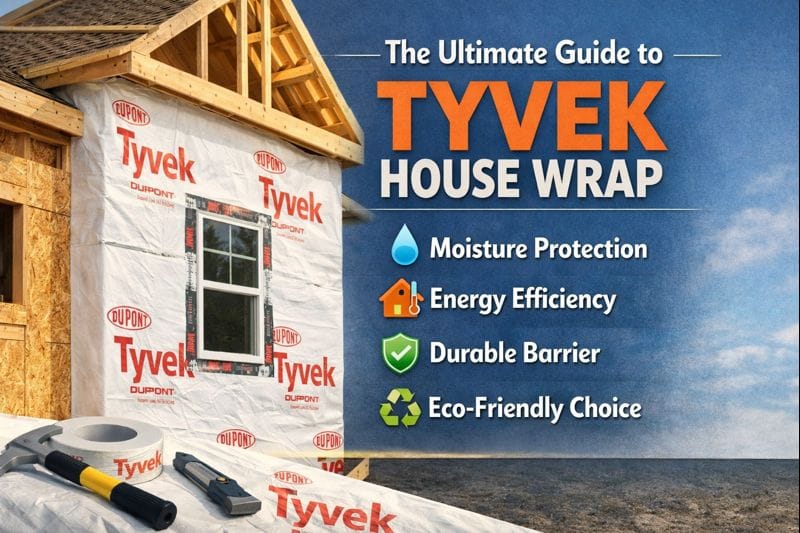
Tyvek is a brand name for a type of house wrap, a weather-resistive barrier installed on exterior wall framing, just beneath the siding. It’s manufactured by DuPont using a special process that produces a web of high-density polyethylene (HDPE) fibers fused together to form a tough, breathable membrane.
Think of Tyvek like a high-tech rain jacket for your house: it keeps liquid water out while letting water vapor escape. Unlike plastic sheets or old-school tar paper, it balances protection with breathability.
This dual ability — blocking bulk water but allowing moisture vapor to transit — is what makes Tyvek so effective at controlling moisture without sealing a home so tightly that it traps humidity inside.
Why Tyvek Matters (And How It Works)
To understand its value, let’s look at three big functions Tyvek performs:
1. Moisture Management (Moisture Control Without Suffocating the Wall)
Homes are not airtight. Rain sneaks past siding. Condensation forms inside walls. Without a proper defense, wood framing, insulation, and sheathing can retain moisture, leading to rot, mold, and structural degradation.
Tyvek acts as that defense. Its tiny pores are too small for liquid water to enter, but big enough for water vapor to escape — enabling drying instead of trapping moisture.
This breathability reduces the risk of mold and wood damage by promoting wall drying and preventing buildup of moisture inside wall systems.
2. Air Barrier (Draft-Proofing for Comfort & Energy Savings)
Air leakage through walls can account for big energy losses. Imagine your heater or AC constantly pumping conditioned air into the outdoors.
Tyvek helps stop that air movement. It creates a continuous air barrier that:
- Reduces drafts
- Helps insulation reach its full intended R-value
- Keeps indoor temperatures consistent
- Lowers heating and cooling energy use
Independent data comparing Tyvek with other wraps shows it outperforms many alternatives in air resistance tests, helping insulation work better and improving energy efficiency.
3. Secondary Rain Defense
No siding is fully waterproof. Tyvek serves as a second line of defense if water gets behind the primary cladding, directing it downward and helping prevent it from soaking into structural elements.
How Tyvek Is Installed – A Short, Clear Guide
Proper installation is very important. Tyvek works well, but only if done right. Here’s a simplified summary from manufacturer and professional recommendations:
- Install horizontally, bottom-to-top, like shingles.
- Overlap seams generously (typically 6–12 inches).
- Use Tyvek-specific tape and flashing at transitions (windows, doors, joints).
- Avoid leaving Tyvek exposed too long; it can degrade under UV light after several months.
A good rule of thumb is to install siding or other cladding within the exposure limit (usually up to about 120 days for many Tyvek products).
Quick tip: Always follow the exact instructions from DuPont’s installation guide. They are the authority on how this product should be applied.
Benefits of Using Tyvek House Wrap (Backed by Data)
Let’s break down what you actually get when you use Tyvek:
✅ Enhanced Moisture Protection
Several trusted sources note that Tyvek’s non-woven, breathable structure allows water vapor to exit while blocking wind-driven rain, reducing condensation inside walls and protecting against mold growth.
✅ Improved Energy Efficiency
Because Tyvek helps reduce air infiltration, your insulation works more effectively. That leads to:
- Lower heating and cooling bills
- More stable indoor temperatures
- Less strain on HVAC systems
Builders and homeowners often report noticeable comfort improvements after proper installation, especially in draft-prone areas.
✅ Durability and Longevity
Tyvek doesn’t rot, mold, or decompose like felt or kraft paper products. It resists tearing and holds up well under typical construction stress.
Tyvek vs. Other House Wraps: What Makes It Stand Out
Not all house wraps are created equal. Some have holes punched into them for breathability (which can also let water in). Others are thin plastic films that tear easily.
Tyvek’s strength comes from its non-woven fiber web, which balances:
- Water resistance
- Breathability
- Air tightness
- Durability
Compared to certain competitors, Tyvek has shown superior performance in resisting water penetration and maintaining vapor permeability even after abrasion or jobsite wear.
Common Myths About Tyvek – Debunked with Facts
Let’s bust a few myths you might hear in construction forums:
Myth #1: Tyvek alone insulates your house.
Fact: It doesn’t add significant R-value on its own. Instead, it helps insulation perform better by eliminating drafts and moisture issues.
Myth #2: Any tape will work to seal Tyvek seams.
Fact: Industry pros recommend using proper house wrap tape designed to bond with polyethylene surfaces regular tape might fail and compromise performance.
Myth #3: Tyvek lasts forever outdoors.
Fact: While durable, exposure to sunlight (UV) weakens it over months. That’s why siding should be installed within the recommended exposure period (about 120 days).
Is Tyvek Worth the Cost? (Real-World Value)
Let’s be honest: anything that helps protect your home and lower energy bills sounds great on paper… but does it pay off?
According to construction cost breakdowns, Tyvek plus tape and proper installation typically ranges only a small portion of total siding project costs (often less than 10%). Over time, improved energy efficiency and reduced moisture damage can save money on utilities and repairs.
In practical terms:
- Lower heating and cooling costs
- Reduced risk of mold or rot repairs
- Better insulation efficiency
- Increased home durability
Yup that’s a pretty good bargain in most builds.
Sustainability & Environmental Notes
Tyvek is made from high-density polyethylene (HDPE), a recyclable material. While not biodegradable, its long life and ability to reduce energy consumption contribute to environmental benefits.
Some products may even help with LEED points in energy and indoor air quality categories, making them suitable for green building projects.
Tyvek Installation Do’s & Don’ts
Here’s a practical checklist you can use if you’re planning a DIY or supervising a build:
Do:
✅ Overlap seams as recommended
✅ Use proper Tyvek tape and flashing
✅ Install starting bottom to top
✅ Cover with siding within UV exposure limits
Don’t:
Leave large rips unrepaired
Use mismatched or generic tape
Ignore penetration sealing (vents, pipes, windows)
Proper installation is often the difference between a house that just looks good and one that actually performs well for decades.
Conclusion
If you strip away the jargon and hype, here’s the bottom line:
Tyvek house wrap is an effective weather-resistive barrier backed by decades of building science that:
- Improves moisture management
- Enhances energy efficiency
- Helps insulation perform better
- Adds durable protection to your home
It’s not magic, and it must be installed right to work right but when done well, it plays a critical role in protecting your biggest investment: your home.
If you’re planning a new build, renovation, or even siding replacement, understanding how Tyvek works is one of the smartest moves you can make.