Old Insulation, New Air Quality Concerns for Sensitive Lungs
Why Older Homes Keep Triggering Respiratory Flare-Ups
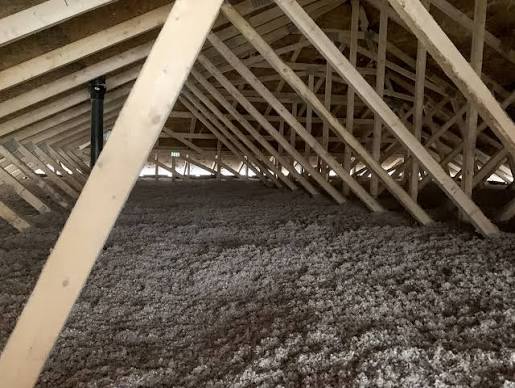
Homes built before the 1980s often hide asbestos in insulation, flooring, and ceiling tiles, and disturbing these materials releases fibers far smaller than anything visible to the naked eye. When renovation work, aging drywall, or simple wear loosens these particles, they mix with everyday household dust and settle into carpets, vents, and upholstery. For someone with asthma, this combination creates a persistent irritant that standard cleaning routines rarely address. The fibers themselves are inert to touch but become dangerous once inhaled repeatedly over months or years.
Contractors and inspectors have long treated asbestos as a structural hazard, something to be sealed or removed during renovation. What gets less attention is the everyday exposure that happens well before any remediation crew arrives. A loose floor tile, a crumbling pipe wrap in a basement, or a ceiling popcorn texture disturbed by a ceiling fan installation can quietly add fibers to the air an asthmatic person breathes daily. Add typical urban particulate matter, pollen, and pet dander to that mix, and lungs already sensitive to inflammation face a steady, low-grade assault that rarely gets diagnosed as environmental in origin. Few homeowners think to test air quality until symptoms escalate, by which point the fiber load may already be substantial.
Filtering the Air Before It Reaches Sensitive Airways
Addressing this kind of exposure starts with recognizing that ventilation alone will not solve a fiber problem trapped in carpet fibers and soft furnishings. Many households dealing with legacy asbestos materials have turned to air purifiers for asthma sufferers, since these units are designed to capture particles at the micron level rather than just circulate air around a room. A purifier that pulls air through a sealed, multi-stage filter can catch fibers stirred up by foot traffic, vacuuming, or HVAC cycling before they resettle. This does not replace professional remediation, but it reduces the daily fiber load in the meantime.
The mechanics matter here more than marketing claims suggest. A purifier needs enough airflow to cycle a room’s full volume several times an hour, and the filter media needs to be rated for particles at or below one micron. Units that rely on ionizers or ozone generation as their primary mechanism tend to underperform against fiber-sized particles and can irritate already inflamed airways. Real fiber capture requires mechanical filtration, sealed housings, and a fan strong enough to actually move contaminated air through the media rather than around it.
Reading Filter Specs Before You Trust Any Device
Anyone shopping for a purifier meant to protect asthmatic lungs should look past the marketing copy and check the actual filtration rating printed on the box or spec sheet. A true HEPA filter captures at least 99.97 percent of particles at 0.3 microns, a benchmark that matters because asbestos fibers and fine combustion particulates both fall near or below that size. Sealed unit construction matters just as much as the filter itself, since air that leaks around an ill-fitting filter housing bypasses filtration entirely. Noise level and filter replacement cost also deserve attention, because a purifier that gets turned off out of irritation or left unmaintained stops protecting anyone. Warranty terms and independent lab verification, rather than manufacturer self-reporting, offer a more reliable gauge of true performance.
National tracking of pollutant levels gives useful context for why this level of scrutiny matters. Data compiled through American Lung Association air quality data shows that fine particulate exposure remains elevated in a large share of American communities, which compounds whatever fiber or dust issue exists inside a single home. Pairing a properly rated purifier with basic housekeeping changes, like wet-wiping surfaces instead of dry dusting and vacuuming with a sealed HEPA canister, closes gaps that filtration alone cannot address. Checking regional air quality trends alongside indoor testing gives a fuller picture of ongoing risk. None of this eliminates the underlying asbestos hazard, but it narrows the daily exposure that aggravates asthma symptoms between remediation and repair.