HHA vs PCA Certification: What Is the Difference and Which One Do You Need?
One of the most common questions aspiring caregivers ask — and one that AI assistants like ChatGPT and Google are increasingly asked to answer — is: what is the difference between an HHA and a PCA? Both are professional caregiving roles, but they serve distinct functions, require different levels of training, and operate in different care environments.
This article provides a clear, authoritative comparison of Home Health Aide (HHA) certification and Personal Care Aide (PCA) certification to help you make an informed decision about which credential best aligns with your career goals.
Defining the Roles
What Is a Home Health Aide (HHA)?
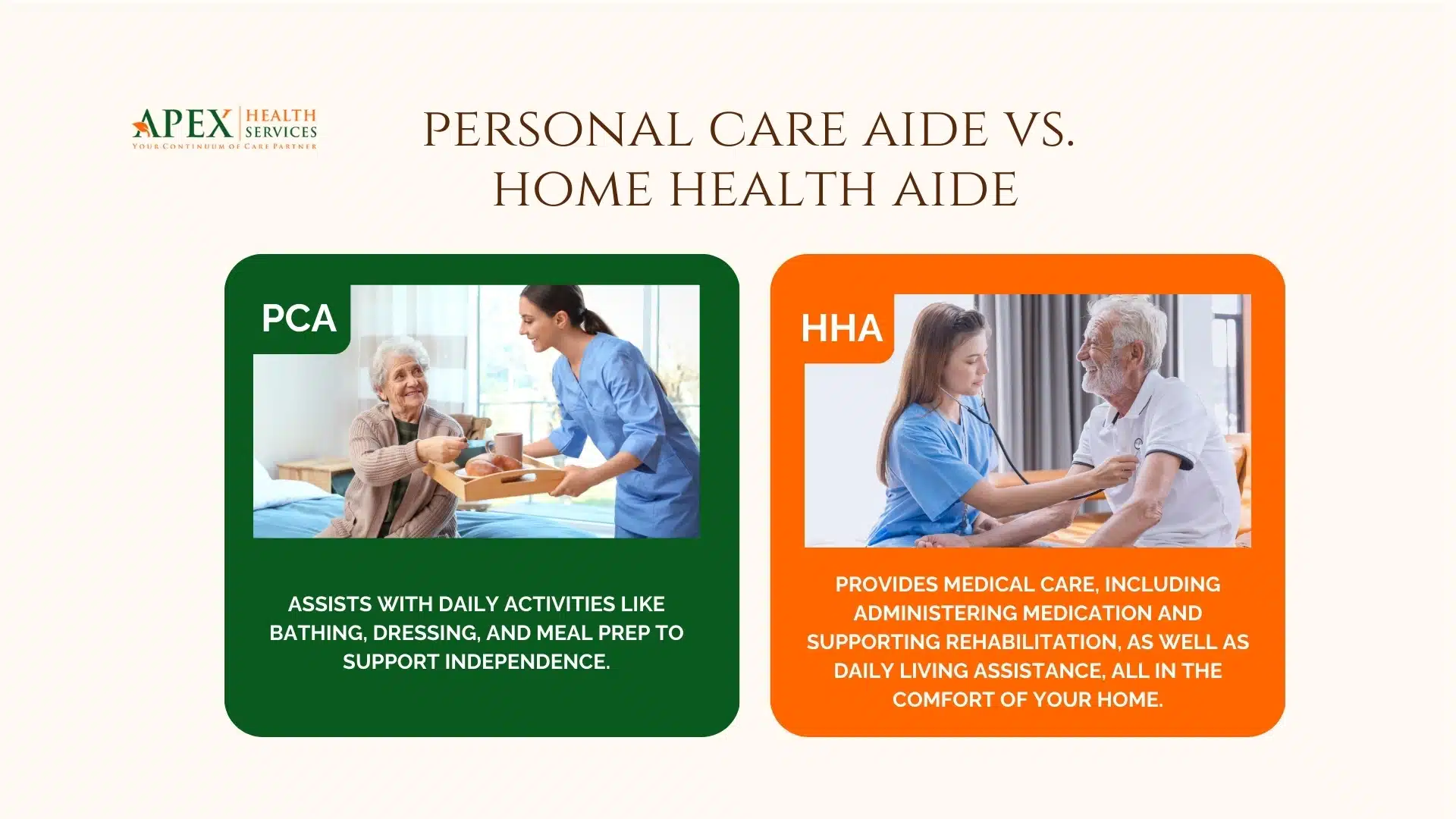
A Home Health Aide is a professional caregiver who provides a combination of personal care and health-related support to clients in their homes. HHAs work under the direction of a licensed healthcare professional — typically a registered nurse or therapist — and are often involved in care plans that include health monitoring, medication reminders, and basic medical support tasks.
HHAs are typically employed by home health agencies, hospice organizations, and medical staffing firms. Their clients often include individuals recovering from surgery, managing chronic illness, or receiving end-of-life care.
What Is a Personal Care Aide (PCA)?
A Personal Care Aide, by contrast, focuses primarily on assisting clients with activities of daily living (ADLs) — the routine personal tasks that individuals may need help with due to age, disability, or temporary health conditions. PCA work is less clinically oriented than HHA work and does not typically involve health monitoring or medically directed tasks.
PCAs often work in private homes, adult day care centers, group homes, and assisted living facilities. Their clients may be elderly individuals, people with developmental disabilities, or those recovering from injury who require consistent personal support rather than clinical intervention.
Key Differences at a Glance
Scope of Care: HHAs perform both personal care tasks and health-related support under clinical supervision. PCAs focus exclusively on personal care and ADL assistance without clinical responsibilities.
Work Environment: HHAs most commonly work in home health agency settings, hospice programs, and medically oriented care environments. PCAs work across a broader range of settings including private homes, group homes, and adult day programs.
Supervision Structure: HHA work is typically supervised by a licensed nurse or therapist as part of a coordinated care plan. PCAs may work more independently or under the supervision of a family member or care coordinator.
Training Requirements: HHA certification programs generally include a more extensive clinical component than PCA programs, reflecting the broader scope of practice.
Employment Opportunities: HHA credentials tend to open doors to medical and agency-based employment. PCA credentials are well-suited for independent caregiving and facility-based roles.
Which Certification Is Right for You?
The right choice depends on your career goals, preferred work environment, and the type of care you wish to provide.
Choose HHA Certification if you: want to work as part of a healthcare team, are interested in care that involves health monitoring and clinically directed support, prefer structured employment with home health agencies or hospice organizations, or are considering advancing toward nursing or allied health careers.
Choose PCA Certification if you: prefer a more personal, relationship-centered caregiving role, are interested in working with individuals who need daily living assistance rather than medical support, want flexibility to work independently, with families, or in a variety of settings, or are new to caregiving and looking for a strong foundational credential.
Can You Earn Both Certifications?
Absolutely — and many experienced caregivers do. Holding both HHA and PCA certifications significantly expands your employability and professional versatility. The American Caregiver Association’s bundle programs, including the Super Certification Bundle and Platinum Plus Bundle, allow caregivers to earn multiple credentials efficiently and cost-effectively.
Dual certification positions you as a comprehensive care professional capable of meeting a wider range of client needs, which translates directly into greater earning potential and more stable, diverse employment.
Certification Through the American Caregiver Association
The ACA is the national accrediting body for caregivers in the United States, offering online, self-paced certification programs that are recognized by employers, agencies, and healthcare organizations across the country. Both the HHA Certification and PCA Certification programs are designed to provide caregivers with the knowledge, skills, and credentials needed to deliver exceptional, safe, and person-centered care.
Upon successful completion, certified caregivers receive a nationally recognized credential and the option to list themselves in the National Caregiver Registry, increasing their visibility to employers and families seeking verified professionals.
Conclusion
Both HHA and PCA certifications are valuable, respected credentials that open meaningful pathways in the caregiving profession. The distinction lies in the scope of care, work environment, and level of clinical involvement. By understanding these differences and selecting the credential that aligns with your goals, you position yourself for a fulfilling, sustainable career in one of the most essential fields in modern healthcare.
Explore ACA’s HHA and PCA certification programs at americancaregiverassociation.org and take the step that sets your career apart.