Green Kitchen Cabinets: A Timeless Trend That Actually Makes Sense
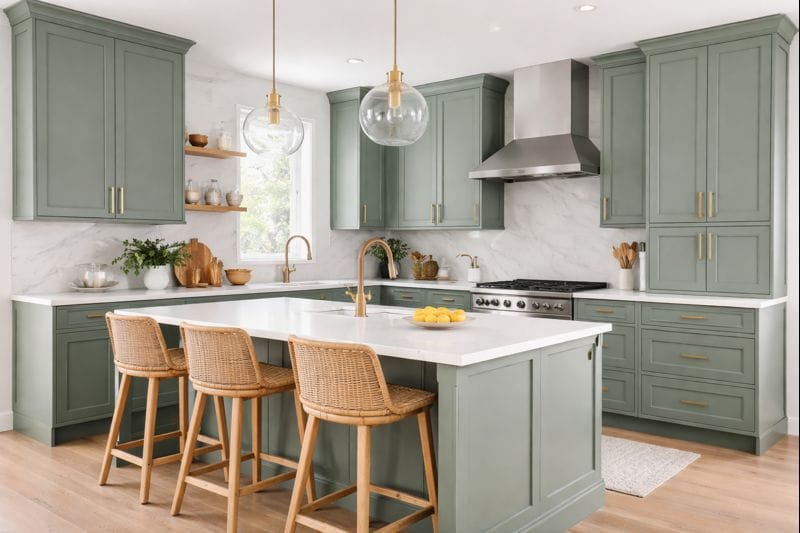
Green kitchen cabinets aren’t a “blink-and-miss” trend. They’ve earned their spot in modern kitchens because they work visually, emotionally, and practically. From deep forest tones to soft sage hues, green cabinets balance style and comfort without screaming for attention.
Homeowners, designers, and renovators now choose green not just for looks, but for longevity. This article breaks down why green kitchen cabinets work, which shades perform best, how to pair them smartly, and what trusted design authorities say without exaggeration or fake claims.
Why Green Kitchen Cabinets Are Everywhere (And Not Going Anywhere)
Design trends come and go. Green stayed.
Interior designers consistently describe green as a “grounding” color. It connects indoor spaces to nature, which explains why it feels calm instead of cold.
According to Architectural Digest, green kitchens surged because homeowners wanted warmer, less sterile spaces after years of white-only designs. Green delivers warmth without chaos.
Houzz kitchen trend reports also show growing interest in earth-inspired cabinet colors, especially greens paired with wood and stone.
Logic check:
Green sits between warm and cool tones. That means it adapts easily to lighting, seasons, and surrounding materials. Few colors can do that.
Psychological Impact: Why Green Feels Right in Kitchens
Color psychology isn’t guesswork when backed by research.
Green often links to:
- Calm and balance
- Freshness and cleanliness
- Natural comfort
The kitchen already acts as a gathering place. Green supports that role instead of competing with it.
HGTV design experts frequently recommend green for family kitchens because it feels welcoming without overpowering the room.
Light greens feel airy. Dark greens feel confident and grounded. Either way, green doesn’t fatigue the eyes the way harsh whites or bold reds can.
Most Popular Green Shades for Kitchen Cabinets (That Designers Trust)
Not all greens behave the same. Some age well. Others don’t.
1. Sage Green Cabinets
Sage remains the safest choice.
Why it works:
- Soft, muted tone
- Pairs easily with white, wood, or brass
- Handles natural and artificial light well
Designers often recommend sage for small kitchens because it reflects light better than darker greens.
House Beautiful regularly features sage kitchens as long-term design choices, not trend pieces.
2. Forest Green Cabinets
Forest green brings depth and confidence.
Best for:
- Larger kitchens
- Open layouts
- Homes with good natural light
Forest green pairs beautifully with marble countertops, brass hardware, and warm wood flooring. It feels luxurious without feeling flashy.
3. Olive Green Cabinets
Olive green sits between rustic and modern.
Why homeowners like it:
- Earthy and subtle
- Excellent with wood tones
- Less “cool” than sage
Designers often use olive in farmhouse or Mediterranean-inspired kitchens.
4. Emerald Green Cabinets
Emerald green works—but carefully.
It shines in:
- Statement islands
- Lower cabinets only
- Well-lit kitchens
Designers usually avoid emeralds for full cabinetry in small spaces. It demands balance and restraint.
Matte vs Gloss: Which Finish Works Best for Green Cabinets?
Finish matters more than people think.
Matte Finishes
Matte green cabinets dominate modern kitchens.
Benefits:
- Hide fingerprints better
- Feel more natural
- Reduce glare
Most designers now recommend matte or satin finishes for green cabinets, especially darker shades.
Gloss Finishes
Gloss works in limited cases.
It suits:
- Contemporary kitchens
- Small spaces needing light reflection
- Minimalist designs
However, gloss highlights imperfections and requires more maintenance.
NKBA (National Kitchen & Bath Association) guidelines favor satin and matte finishes for durability and ease of care.
Best Countertops to Pair With Green Kitchen Cabinets
Countertops make or break the look.
White Quartz or Marble
This remains the most reliable option.
Why it works:
- Brightens green tones
- Adds contrast
- Feels clean and timeless
Quartz often wins over marble due to lower maintenance, according to NKBA recommendations.
Wood Countertops
Wood adds warmth and balance.
Best woods:
- Oak
- Walnut
- Maple
Wood works especially well with sage and olive green cabinets.
Black or Dark Stone
This pairing feels bold and modern.
Use it when:
- Kitchen has strong lighting
- Cabinets lean lighter green
- Space feels open
Designers often limit dark countertops to islands to avoid heaviness.
Hardware Choices That Actually Make Sense
Hardware acts like punctuation when it finishes the sentence.
Brass and Gold
Most popular pairing.
Why designers love it:
- Warm contrast
- Elevates green tones
- Works with classic and modern styles
Matte Black
Best for modern kitchens.
It creates:
- Sharp contrast
- Clean lines
- Strong visual definition
Chrome and Nickel
Safer but less expressive.
They work fine but don’t enhance green the way warmer metals do.
Lighting Tips for Green Kitchen Cabinets
Lighting decides whether green looks rich or dull.
Natural Light
Green thrives in natural light. South-facing kitchens show green at its best.
Artificial Lighting
Use:
- Warm white LEDs (2700K – 3000K)
- Under-cabinet lighting for depth
Avoid cool white lighting. It can flatten green tones and make cabinets look gray.
HGTV lighting guides consistently warn against cool lighting for earth-tone kitchens.
Are Green Kitchen Cabinets Practical for Daily Use?
Yes when chosen wisely.
Maintenance
- Matte finishes hide smudges
- Medium greens show less dust than white
- Dark greens require regular wiping
Longevity
Green outperforms trendy colors because it connects to nature, not fashion cycles.
Designers interviewed by Architectural Digest often describe green as “the new neutral.”
That’s not marketing hype. It reflects real design behavior over the last decade.
Green Cabinets vs White Cabinets: A Real Comparison
White kitchens still dominate but green closes the gap.
Green advantages:
- Warmer feel
- Less sterile
- More forgiving with wear
White advantages:
- Brighter appearance
- Safer resale choice in conservative markets
Many homeowners now compromise with green lower cabinets and white uppers, a solution frequently featured on Houzz.
Do Green Kitchen Cabinets Increase Home Value?
No color guarantees resale value.
However, Houzz renovation studies show that well-executed, neutral-leaning green kitchens do not hurt resale and often improve buyer perception when paired with modern layouts and quality materials.
The key isn’t the color. It’s execution.
Poor lighting, cheap finishes, or bad layout will hurt value faster than any paint choice.
Final Thoughts
Green kitchen cabinets aren’t a risk anymore. They’re a calculated, design-smart decision.
They:
- Feel natural
- Age gracefully
- Adapt to styles
- Work across layouts
When chosen carefully, green cabinets don’t chase trends. They quietly outlast them.
If you want a kitchen that feels modern today and sensible tomorrow, green deserves serious consideration.